


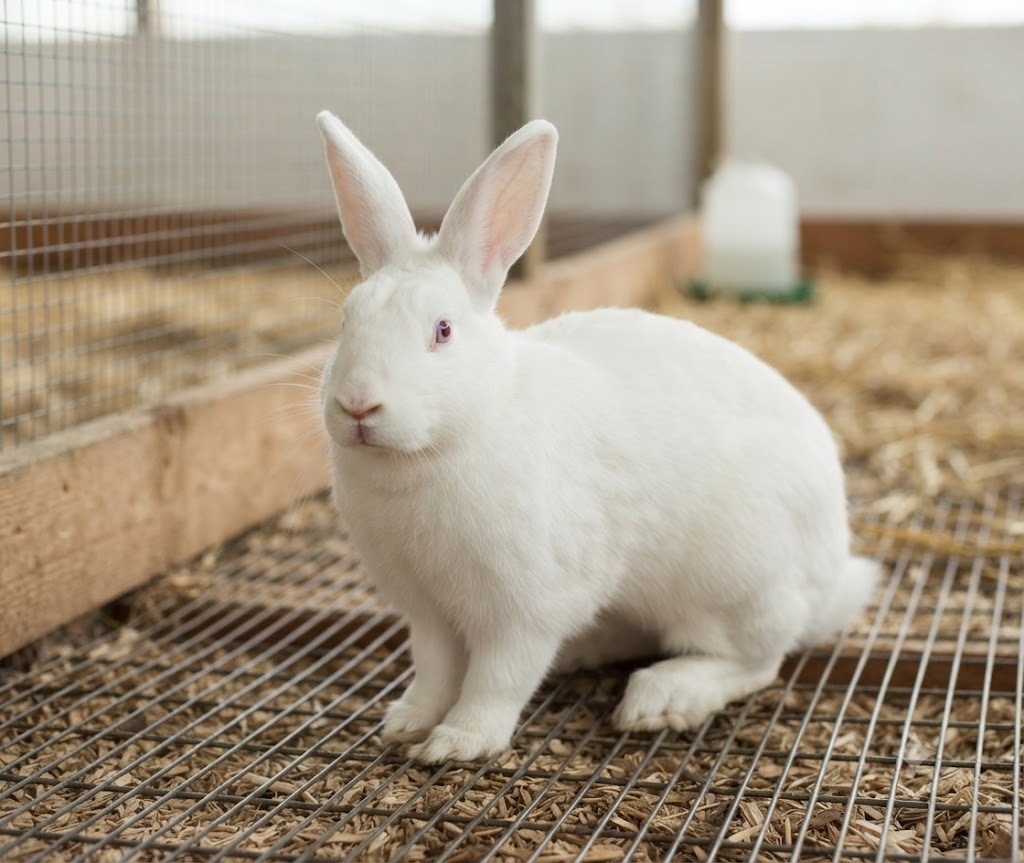
Although rabbits are not a major livestock species in the domestic industry on a scale comparable to cattle, pigs, or chickens, they are specialized animals capable of serving distinct markets for meat, research, fur, and by-products. In government agricultural management forms, rabbits are managed separately as "other livestock" alongside goats, sheep, honeybees, and deer; furthermore, under the 2026 tax law, the threshold for the scale of farm sideline businesses in the livestock sector is set at 5,000 animals . ( Mafra )
Excluding the pet rabbit market, MarketHub views the basic supply chain as follows : breeding → rabbit production → weaning → rearing/fattening → shipment → slaughter/processing → meat/by-products → Buyer . Research rabbits are separated from the meat supply chain and managed via a separate RFQ focusing on rearing environment, strain, health status, and facility conditions.
Judgment axis | Key points |
| Main types | For meat, fur, and research |
| production core | Breeding · Soil Survival · Feed · Environment |
| merit | Short breeding cycle · Relatively small rearing space |
| Major risks | Disease, high temperature, ventilation, and soil death |
| core products | Live animals, rabbit meat, research specimens, by-products |
| quality | Lineage · Age · Weight · Health · Carcass |
| AX | Breeding, Growth, Feed, Environment, and Mortality Data |
| RFQ | Breeding stock · Meat · Research · Feed · Buyer |
| Final goal | Verification of productivity and sales channels for small-scale specialty livestock farming |
It is more realistic to view the rabbit industry as a market where the appropriate production scale must be determined after confirming the existence of actual buyers, rather than an industry that should prioritize large-scale expansion. Therefore, Buyer-led Production is applied first rather than production expansion.
Rabbits are classified according to their purpose into meat, fur, and research types, and even within the same species, body weight, growth rate, coat quality, and research characteristics vary depending on the breed and strain. Therefore, simply registering them as "rabbits" in the RFQ makes it difficult to accurately meet the requirements of both producers and buyers.
In particular, research rabbits may have completely different requirements than general meat rabbits. Depending on the research purpose, strain, sex, age, body weight, and health status become important conditions, so they must be separated into a separate Product Entity.
division | Main purpose | major products |
| meat rabbit | Meat | Livestock · Rabbit meat |
| breeding stock | breeding | Male and female breeding stock |
| For research purposes | Research and testing | Standardized research objects |
| for fur | fur and fur | One Piece · Mo |
| by-product | Industry and Resources | Leather, manure, etc. |
The basic structure is managed as Rabbit → Breed/Line → Production Purpose → Production Stage → Product → Buyer .
For meat rabbits, growth rate, feed efficiency, reproductive performance, and carcass characteristics are important. On the other hand, for research rabbits, line consistency, health status, rearing environment, and the reliability of records may be more important conditions than rapid growth.
Therefore, rather than evaluating the rabbits held by a production farm simply by their number, it is necessary to first distinguish which production group is suitable for which purpose . If a farm produces rabbits for various purposes, it is advisable to separate the breeding group from the production lot.
division | example | Management standards |
| livestock species | rabbit | Rabbit |
| Variety/Lineage | Systems by Production Purpose | Genetics and Growth |
| production purpose | Meat, Fur, Research | Rearing methods |
| production stage | Growing, rearing, fattening, breeding | Step Management |
| product | Live animals, meat, and research | standard |
| Buyer | Food, Research Institutes, Processing | Purchase conditions |
In other words, it is important to identify the purpose before the variety and apply productivity indicators suitable for that purpose .
The productivity of a rabbit farm should not be judged solely by how many rabbits a single breeding sow gives birth to. Actual productivity is achieved only when the offspring are healthy, weaned, and survive until the shipping or supply stage.
Not only feed but also water supply, ventilation, insulation, stocking density, and facility management are important. The animal welfare-friendly rabbit farm standards prepared by the National Institute of Animal Science also suggested managing feeding, water supply, ventilation, insulation, facilities, stocking density, and feed, medicine, and disease control together. ( National Institute of Animal Science )
Management area | Things to see at a farm |
| breeding | Mating, pregnancy, and childbirth |
| kaolin | Number of hatchlings, weaning, death |
| feedstuff | Feeding amount, intake amount, cost |
| water supply | Water quality and supply conditions |
| growth | Weight/Daily Gain |
| environment | Temperature, humidity, and ventilation |
| health | Disease, Treatment, Death |
| shipment | Age, weight, price |
Therefore, farm performance must be evaluated by looking at the survival rate and growth rate at each stage: farrowing, weaning, rearing, and shipping .
Since rabbits can be housed in large numbers in small spaces, the introduction of a disease can affect the entire breeding population. Therefore, basic biosecurity measures are crucial, including controlling the introduction of new individuals, farm entry, hygiene of breeding tools and facilities, and the management of deceased animals.
Internationally, Rabbit Hemorrhagic Disease and Myxomatosis are managed as important rabbit diseases. WOAH addresses pathogenic rabbit Lagovirus infection and Myxomatosis within the international animal disease management system, and Myxomatosis is a viral disease that can affect both captive and wild rabbits. ( WOAH )
step | Key Management |
| birth | Mother, Date of Birth, Number of Offspring |
| reason | Reason, Day, Weight, Survival |
| upbringing | Feed, body weight, environment |
| health | Symptoms, Treatment, and Death |
| movement | Farm, Facilities, Shipment |
| slaughter | Date · Population · Lot |
| process | Conductor/Product Lot |
| circulation | Origin · Buyer |
MarketHub reduces the burden on farms where individual management is overly complex by managing them using the Cage/Pen Group + Production Lot method.
In Korea, the industrial structure of rabbits differs from that of cattle, pigs, and chickens, which form the major livestock consumption markets. Since rabbits are classified as "other livestock" in official agricultural management data, the domestic production base should not be overestimated. ( Mafra )
Therefore, when establishing a new rabbit farm or expanding production, you must first determine who will purchase them . If for meat production, you must verify the demand from specialty restaurants, processing, and distribution; if for research, you must verify the specific specifications and supply conditions of research institutions and testing laboratories.
Participants | Things needed | RFQ possibility |
| production farms | Breeding stock, feed, and sales channels | Producer |
| Meat Buyer | Specifications and Quantity | Buyer RFQ |
| slaughter and processing | stable shipment | Processing |
| Research Institute | System, Age, Health | Research RFQ |
| feed company | Specialized feed | Feed |
| distribution company | stable supply | Distribution |
| local government | Possibility of special livestock | Regional AX |
The fact that 5,000 rabbits are separately stipulated as the scale for farm sideline businesses under tax law as of 2026 demonstrates that rabbits are institutionally included as targets for livestock production. However, this figure should not be interpreted as the appropriate farm size for ensuring economic viability. ( Mafra )
The supply chain for rabbits varies depending on the production purpose. For meat, the flow extends from breeding farms to slaughter, processing, and food buyers, whereas for research, a separate flow may be established where rabbits are supplied directly from production facilities to research institutions.
In international trade, the HS codes and quarantine conditions may differ for live animals, rabbit meat, raw hides, etc. Therefore, when an actual RFQ is generated, the latest conditions from the Animal and Plant Quarantine Agency and customs authorities are reconfirmed based on the product type and the country of origin and destination.
Breeding → Grain → Rearing/Fattening → Shipment → Slaughter/Processing → Distribution → Buyer
For research purposes:
Breeding/Production → Health/Standard Verification → Transportation → Research Institute
It is managed separately.
Transaction confirmation | Main contents |
| Happy Birthday | Breed, lineage, sex, age |
| meat | Carcass · Part · Refrigeration · Freezing |
| For research purposes | System, weight, and health status |
| Quarantine | Country of Origin/Disease Conditions |
| trade | HS·Customs |
| transit | Temperature, Welfare, Time |
| Buyer | Specifications, Quantity, Delivery Time |
In actual international RFQs, HS + Quarantine + Origin + Product Form are verified again at the time of transaction.
For meat rabbits, product specifications after slaughter and processing may be more important to buyers than selling them as live animals. Verifying factors such as refrigeration/frozen status, carcass weight, cutting type, packaging unit, and supply cycle is essential to secure an actual transaction.
In PRP, the focus is on the profit margin relative to production costs and actual purchasing demand, rather than the fact that rabbits grow quickly . For research use as well, the key is not the general market price, but how stably and repeatedly the specifications required by the buyer can be supplied.
product | Main uses |
| breeding stock | Breeding and improvement |
| kaolin | upbringing |
| Livestock for meat | slaughter |
| rabbit meat | Food & Dining |
| Research rabbit | Research and testing |
| One-piece/Fur | subject matter |
| excretions | Composting and resource recovery |
Key PRP questions include how much autogenous mortality can be reduced, whether feed efficiency is adequate, how long it takes to reach the target shipping weight, whether slaughter and processing infrastructure is available, and whether there are stable buyers .
There is no need to introduce expensive automation facilities upfront for rabbit AX. Farm productivity can be compared quite specifically simply by recording breeding dates, births, litter size, weaning, body weight, feed quantity, and causes of death.
As the scale increases, it can be expanded to monitor barn temperature, humidity, ventilation, water supply, and feed intake using sensors to detect abnormal signs early. The key is not the equipment, but using data to identify where production losses are occurring .
Apply AX | farm effect |
| Breeding records | Comparison of delivery outcomes |
| Jato record | Confirmation of dead section |
| Automatic weight | Check growth rate |
| Historical records | Feed efficiency analysis |
| environmental sensor | High temperature and ventilation management |
| Disease records | Check for repetitive problems |
| Shipment data | Optimal shipping time |
| Buyer Matching | Sales channel verification |
In other words, the realistic sequence is: documentation → discovery of mortality/growth issues → comparison of causes → specification improvement → production cost reduction → connection to a buyer .
One of the biggest problems in the domestic rabbit industry is the difficulty in accurately verifying market size and transaction information, rather than production itself. Even if farmers expand production, problems can arise at the sales stage without stable slaughtering, processing, and buyers.
Within the farm, soil mortality, environmental management, disease, and feed costs are important productivity variables. Therefore, the MarketHub Problem Bank manages farm and market problems together, rather than viewing them separately.
problem | Data to verify |
| Zato death | Childbirth, Weaning, Environment |
| Delayed growth | Feed and body weight |
| High temperature stress | Temperature and ventilation |
| disease | Symptoms, Deaths, and Quarantine |
| feed costs | Intake, Price, Growth |
| slaughter | Facilities, Distance, and Treatment Conditions |
| Market shortage | Buyer · Demand |
| Lack of price information | Production costs and transaction prices |
| Research supply | System, Standard, and Facilities |
| Lack of statistics | Farms, breeding, and shipment |
The basic solution structure is problem identification → verification of production data → verification of market demand → small-scale demonstration → verification of economic feasibility → expansion of production .
A rabbit RFQ encompasses not only the trading of breeding and live animals but also the supply of feed, slaughter, processing, and research, as well as the identification of buyers. Particularly given the limited size of the domestic market, it is safer to design production after securing actual buyers, rather than attempting to expand the number of production farms first.
Research rabbits are managed separately from those for meat. You must first verify the strain, age, sex, weight, health, and rearing conditions required by the research institution, and then find a supplier that can meet those requirements.
RFQ Type | Collaboration Examples |
| breeding stock | Males and females for breeding |
| kaolin | Standing and raising |
| meat | Live animals and carcasses |
| feedstuff | Rabbit feed |
| slaughter | Formal slaughter and processing |
| process | Refrigeration, freezing, and packaging |
| For research purposes | Supply by System and Age |
| Buyer | Food Service, Food, Research |
| AX Pilot | Reproduction, Environment, Growth |
| Research cooperation | Specifications, welfare, and diseases |
MarketHub particularly recommends the sequence of Buyer Confirmation → Contract Terms → Production Planning → Shipment .
MarketHub Livestock Library is more than just a resource center providing rabbit breeding information. It is structured so that production farms, companies, and research institutions first register the products and supply conditions they need, and then connect them with partners capable of actual production and supply.
For specialty livestock with limited markets, such as rabbits, the value lies in verifying the RFQ first and then producing, rather than finding a buyer after production.
① Find products/raw materials.
Need Products & Materials
Companies and institutions seeking necessary breeding stock, meat rabbits, rabbit meat, research rabbits, feed, etc., register their purchase demands. MarketHub reviews supply feasibility by verifying breed, strain, age, weight, quantity, and intended use.
RFQ Registration → Verify Supply Conditions → Connect with Producer → AI Matching
Register
② We are looking for production and processing partners.
Need Suppliers & Manufacturers
We seek necessary production partners, including rabbit farms, breeding farms, slaughterhouses, and processing companies. We evaluate not only production capacity but also health, hygiene, product standards, and the feasibility of a sustainable supply.
RFQ Submission → Review of Production/Processing Capabilities → Partner Connection → AI Partner Matching
Register
③ We are looking for domestic and international buyers.
Need Buyers
Production farms and processing companies seek new buyers, including restaurants, food service companies, and research institutions. We verify products, production volume, quality, and delivery conditions to connect them with suitable buyers.
RFQ Submission → Product & Supply Capability Review → Buyer Connection → AI Buyer Matching
Register
Contact : mail@markethub.org
In rabbit datasets, it is important to determine the level of management according to the farm's size and purpose, rather than recording every individual in a complex manner. Managing breeding stock on an individual basis, while grouping rearing and fattening animals into Cage, Pen, or Lot units as needed, can reduce the record-keeping burden on the farm.
By linking the recorded information on breeding, feed, environment, growth, mortality, and shipment, it is possible to identify which stage incurs the greatest losses. Furthermore, by connecting this with buyer product evaluations, targets for the next production lot can be concretized.
Dataset | Simply put |
| Master | Variety, Production Purpose, and Product Standards |
| Entity | Farm · Breeding Livestock · Lot · Buyer |
| Relationship | Breeding, production, shipment, and trade |
| Runtime | Changes in weight, feed, environment, and price |
The representative structure is as follows.
Farm → Breeding Stock → Breeding → Lot → Feed/Environment → Growth/Health → Shipment → Slaughter/Processing → Buyer
For research purposes:
Breeding Line → Production Lot → Health Status → Specification → Research Buyer
Separate into.
Public statistics regarding the latest number of rabbits raised, slaughtered, and market size are limited compared to major domestic livestock species. Therefore, in this registration, unconfirmed domestic market size or production volume is not estimated and is managed as Verification Required.
Verifiable official data separately records rabbits as "other livestock" in records related to agricultural businesses, and the 2026 Enforcement Decree of the Tax Act also specifies the scale of sideline farming in the livestock sector as 5,000 rabbits. International disease information was verified based on WOAH data. ( Mafra )
Evidence | source |
| A | Government · WOAH · Official Statistics |
| B | Papers · National Research Institutes |
| C | Association/Verification Industry Data |
| D | Corporate and Market Data |
| E | Additional verification needed |
Key factual basis
- According to 2026 data from the Ministry of Agriculture, Food and Rural Affairs, 5,000 rabbits are specified as the standard for the scale of farm sideline businesses in the livestock sector. ( Mafra )
- In official forms related to agricultural management, goats, sheep, honeybees, rabbits, deer, etc., are classified as other livestock, and the number of animals raised is recorded. ( Mafra )
- In research by the National Institute of Animal Science, welfare-oriented rearing standards have been proposed that collectively consider feeding, watering, ventilation, insulation, facilities, stocking density, feed, and disease management when raising rabbits. ( National Institute of Animal Science )
- The WOAH international disease system includes Rabbit Haemorrhagic Disease and Myxomatosis caused by pathogenic rabbit Lagovirus infection. ( WOAH )
Version | Main contents | situation |
| v1.0 | First registration based on precise investigation of production, disease, and market structure | complete |
| v1.1 | Reinforcement of official domestic data on breeding, slaughter, pricing, and distribution | expected |
| v2.0 | Reproduction, Environment, Productivity, and PRP Runtime Connection | expected |
| v3.0 | Production Farms · Processing · Research Institutions · Buyer Matching | expected |