


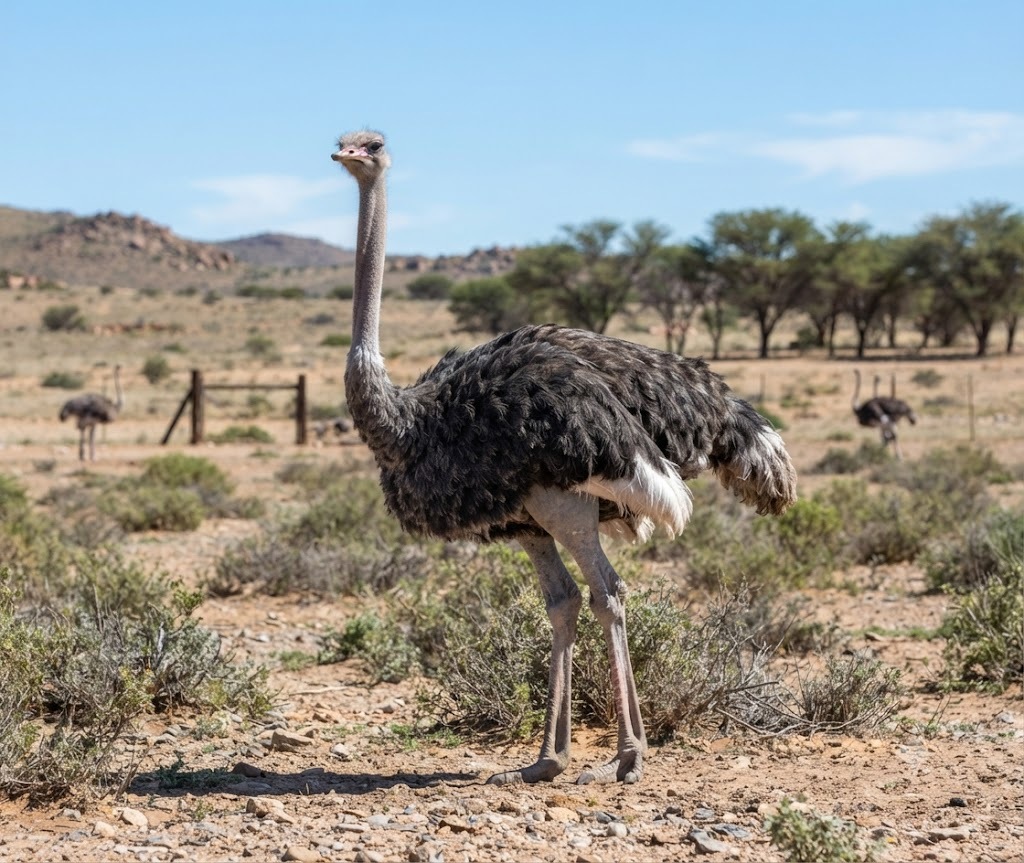
Unlike common poultry such as chickens and ducks, ostriches are large ratites capable of simultaneously producing meat, hides, eggs, hatching eggs, and breeding stock . FAO production data also classifies core commercial products as meat, hides, and feathers, treating breeding and hatching as the starting point of the entire business. ( FAOHome )
However, outdated overseas production figures should not be directly applied to the current economic viability of Korean farms. Since standardized statistics for the large-scale ostrich industry are limited domestically, it is safer to verify the process using actual field data: Buyer demand → securing breeding stock and eggs → hatching and rearing pilot → slaughter and processing feasibility → meat and hide sales prices .
Judgment axis | Key points |
| Main purpose | Meat, eggs, hides, breeding |
| Key production stage | Breeding stock, hatching eggs, hatching, brooding, raising |
| Main Products | Meat, eggs, hatching eggs, leather |
| Additional products | Feathers, fat, and other by-products |
| production core | Fertilization rate, hatching rate, early survival, growth |
| Major risks | HPAI, poor breeding, early mortality, sales channels |
| AX | Individual · Egg · Hatching · Weight · Feed Runtime |
| RFQ | Breeding animals, hatching eggs, live animals, meat, leather |
| Final goal | Connecting multi-product productivity with buyers |
At MarketHub, ostrich is managed not merely as a specialty meat, but as an item encompassing Breeding Intelligence + Meat Production + Leather Value Chain + Buyer-led RFQ .
The ostrich (Struthio camelus) is the largest bird in existence and is a flightless bird with strong legs and rapid mobility. In commercial production, adult birds for breeding, hatching eggs, chicks and growing birds, birds for meat production, and raw hides are each traded as distinct units.
In particular, since slaughtering a single ostrich yields both meat and hide, Meat Yield and Hide Quality should not be viewed in isolation. It is appropriate to design a structure where a single individual is separated into multiple Product Entities from the production stage . The FAO also clearly identifies meat and hide as the primary commercial products of the ostrich. ( FAO Home )
division | Main purpose | Product Entity |
| breeding stock | breeding | Breeding Ostrich |
| fertilized eggs | hatching | Hatching Egg |
| edible eggs | food | Table Egg |
| chick | Standing | Ostrich Chick |
| Yuk Seong-jo | fattening | Grower |
| Shipment group | Meat and leather | Slaughter Ostrich |
| meat | food | Ostrich Meat |
| raw hides/leather | Fashion and materials | Hide / Leather |
The basic structure is Breeder → Egg → Hatch → Chick → Grow-out → Slaughter → Meat + Hide → Buyer .
In ostrich production, it is important to separate breeding lines and production purposes rather than managing them simply as a single species. In actual commercial farms, breeding stock is selected based on criteria such as reproductive performance, growth rate, body conformation, skin texture, and carcass characteristics.
For meat ostriches, the focus is on growth and carcass yield; for leather, on skin surface area, defects, and follicle patterns; and for breeding stock, on fertilization rate, hatching egg productivity, and health. Since edible eggs and hatching eggs are completely different products, they must be distinguished first at the RFQ stage.
Production type | Key Indicators | Major Buyers |
| breeding stock | Fertilization rate and reproductive persistence | farm |
| fertilized eggs | Possibility of fertilization and hatching | hatchery |
| chick | Health, Age, Survival | farmhouse |
| meat | Growth, Carcass, and Meat Quality | Food & Dining |
| edible eggs | Size, hygiene, and freshness | Food & Experience |
| For leather | Raw hide area and defects | leather company |
MarketHub manages production in the order of Production Purpose → Breeder Selection → Production Runtime → Product Specification .
The profitability of the ostrich industry is determined starting from breeding. The egg-laying and fertilization rates of breeding stock, egg management, an incubation period of approximately six weeks, and early chick survival all influence subsequent market volumes. Existing production data from the FAO also indicates an ostrich incubation period of about 42 days, explaining that breeding, hatching, and chick management are the core of the business. However, as this is an outdated international benchmark, it must be replaced with actual values from individual farms. ( FAOHome )
During the early brooding period, managing temperature, hygiene, feed, and exercise space is crucial. Just because an ostrich is large as an adult does not mean it is strong during its early years, and FAO data also describes the first growth stage as a critical risk period for production. ( FAO Home )
Management area | Things to see at a farm |
| breeding stock | Mating, spawning, fertilization |
| fertilized eggs | Storage, Weight, Rotation |
| hatching | Hatching rate and causes of defects |
| chick | Early mortality and growth |
| feedstuff | Consumption amount · Cost |
| playground | Area, Floor, Safety |
| growth | Weight and uniformity |
| shipment | Age and weight |
| expense | Feed, Labor, Facilities |
The core production formula is number of hatching eggs → fertilized eggs → hatched chicks → surviving rearing group → shipment group → sales volume of meat and leather .
Although ostriches belong to a different classification system than general poultry, they are no exception to the risk of avian disease. The WOAH manages highly pathogenic avian influenza (HPAI) as a disease that significantly impacts the international poultry industry and trade, and the USDA is also applying restrictions based on HPAI outbreak areas to the import of rats, including ostriches, and hatching eggs starting in 2026. ( WOAH )
Therefore, disease status and quarantine conditions must be verified when importing breeding stock and hatching eggs from overseas or moving them between farms. Under U.S. standards, the import of rats requires a permit, a veterinary certificate from the exporting country, entry inspection, and, in some cases, quarantine; additionally, ostriches and hatching eggs from HPAI-affected regions are restricted in principle. For trade with Korea as well, the relevant conditions at the time must be separately verified with the Animal and Plant Quarantine Agency ( APHIS). (APHIS )
step | Key Management |
| breeding stock | Object ID · Health |
| fertilized eggs | Egg Lot · Parent Information |
| hatching | Hatch Batch |
| chick | Deaths and diseases |
| upbringing | Feed, body weight, environment |
| movement | Vehicles and Disinfection |
| shipment | Entity · Lot |
| slaughter | Carcass Lot |
| One Piece | Hide Lot |
| circulation | Meat/Leather Buyer |
The representative structure is Breeder ID → Egg Lot → Hatch Batch → Grow-out Lot → Slaughter ID → Meat Lot + Hide Lot .
Domestic ostriches are far removed from major livestock species like cattle, pigs, and chickens, for which large-scale standard statistics are regularly released. Therefore, it is appropriate not to arbitrarily estimate the size of the domestic market when the latest official figures for livestock numbers, slaughter volumes, and transaction prices are unavailable.
In actual business operations, demand for ostrich meat for the food service and food industry, eggs for experiential activities and food, hatching eggs and chicks for breeding farms, and ostrich hides for leather manufacturers must be surveyed separately. In particular, increasing the supply of hatching eggs and breeding stock without meat buyers poses a significant risk regarding sales channels after production.
Participants | Things needed | RFQ |
| livestock breeding farms | Breeding stock and hatching eggs | Breeding |
| New farms | Chicks and Rearing Techniques | Producer |
| hatchery | fertilized egg | Hatchery |
| food companies | Ostrich meat | Meat RFQ |
| food service companies | Cuts of meat | Buyer |
| leather company | raw hides/leather | Leather RFQ |
| Experience farm | Livestock · Eggs | Experience |
| importer | Meat, leather, and breeding stock | Import |
Therefore, for the domestic market, the priority is “how much buyers will actually spend per product” rather than “how much it can be grown .”
The ostrich supply chain is completely divided into live animals, hatching eggs, meat, and leather. Animal quarantine is key for live animals and hatching eggs; for meat, livestock hygiene, quarantine, and refrigeration/freezing systems are crucial; and for leather, raw hides, leather processing, and trade standards are important.
As of 2026, the USDA APHIS classifies rats separately from ostriches, emus, and rheas, and strictly restricts the trade of live animals and hatching eggs from areas with HPAI outbreaks. This demonstrates that in international RFQs, verification of disease status, veterinary certificate, and quarantine takes precedence over breeding stock prices. ( APHIS )
Live Livestock and Hatching Egg Supply Chain
Breeding stock → Hatching eggs → Quarantine → Hatching → Farm → Rearing
Meat and leather supply chain
Shipment Team → Slaughter → Meat Splitting/Refrigeration/Freezing → Food Buyer
Shipment Team → Raw Hide Recovery → Preservation → Tanning → Leather Grading → Leather Buyer
Confirmation area | Main contents |
| Happy Birthday | Individual, Age, Health |
| fertilized eggs | Fertilization, laying date, and quarantine |
| meat | Cuts · Refrigerated · Frozen |
| leather | Raw pick size, defects, and processing condition |
| Quarantine | HPAI · Export country conditions |
| trade | HS · Customs · Country of Origin |
| food | Hygiene, Slaughter, and Inspection |
| Buyer | Specifications, Quantity, Delivery Date |
In the actual RFQ, the Origin + Product Form + Disease Status + Quarantine + HS + Buyer Specification are finally verified.
The industrial strength of the ostrich lies in the fact that a single animal can simultaneously yield two distinct high-value products: red meat and premium leather . The FAO describes ostrich meat as high-protein, low-fat red meat and ostrich leather as high-quality leather used in shoes, bags, and clothing. However, since nutritional figures and marketability assessments are based on outdated data, they must be re-verified using the latest product testing and buyer data. ( FAOHome )
The value of leather is directly affected by injuries sustained during the rearing process and defects during slaughter and skinning. Therefore, rather than considering meat farms and leather farms separately, leather quality must be managed at the rearing stage.
Product Entity | Main uses |
| Ostrich Meat | steak and processed meat |
| Table Egg | Food & Experience |
| Hatching Egg | breeding |
| Hide | Leather raw materials |
| Finished Leather | Bags, shoes, and clothing |
| Feather | Decorative and industrial use |
| Fat | Review of processed materials |
| by-product | Review of feed and materials |
The key questions regarding PRP are whether the profit is generated solely from meat prices, how much the sale of raw hides supplements the revenue, whether tanning is feasible domestically, what the leather defect rate is, and whether actual buyers exist for items such as eggs and feathers.
Ostriches are a good livestock species to apply Individual Animal ID because their value per individual is relatively high . By linking the number of eggs laid, fertilization rate, hatching rate, and offspring growth performance of each breeding stock, it is possible to determine which breeding stock combination has the highest actual productivity.
Utilizing video and weight sensors allows for tracking growth and activity, and automatically saving incubator temperature, humidity, Egg ID, and hatching results enables long-term comparison of breeding performance. However, the starting point of AX is not the automated equipment, but rather the data on the relationship between breeding stock, hatching eggs, and offspring .
Apply AX | Expected effects |
| Object ID | Pedigree/Production History |
| Breeder DB | Breeder performance |
| Egg Runtime | Spawning, fertilization, hatching |
| Hatching sensor | Environmental standardization |
| weight record | Growth Analysis |
| Video AI | Activity and Behavior Auxiliary Analysis |
| Historical records | FCR · Cost |
| conductor-leather connection | Product Yield |
| Buyer Matching | Purpose-driven production |
The core structure is Parent ID → Egg → Chick → Growth → Meat Yield + Hide Grade → Buyer Price .
The greatest risk in the ostrich industry is applying the high profitability presented in past overseas data directly to current business plans. While outdated FAO data presents ideal figures suggesting that a single ostrich can produce a large number of chicks and a significant amount of meat and hides annually, this is a benchmark reflecting the production conditions and assumptions of a specific time and cannot be used as the business rate of return for Korea in 2026. ( FAO Home )
In the domestic market, you should first verify whether the securing of breeding stock, hatching technology, initial survival, feed costs, slaughtering facilities, meat buyers, and leather processing networks are all interconnected.
problem | Verification data |
| Decrease in correction rate | Breeding animals · mating |
| Hatching failure | Hatching eggs and hatching environment |
| chick mortality | Temperature, nutrition, and hygiene |
| Growth deviation | Feed · Space |
| HPAI | Country, Farm, Region |
| Lack of slaughterhouse infrastructure | Facilities and streets |
| Meat sales channels | Buyer · Price |
| leather defects | Wounds and peeling |
| Lack of leather processing | Tanning partner |
| Market overvaluation | Actual contract demand |
The basic solution structure is Buyer investigation → Pilot of breeding stock and eggs → Hatching and rearing → Slaughter test → Simultaneous evaluation of meat and hides → Verification of actual profit and loss .
It is difficult to complete the entire value chain for ostriches with just a single production farm. This is because distinct specialized partners are required for everything from breeding stock, hatching, rearing, slaughtering, meat processing, hide preservation, and tanning to product manufacturing.
Therefore, at MarketHub, it is appropriate to connect Breeding Partner + Processor + Leather Partner + Buyer into a single cooperative network rather than simply selling live animals .
RFQ Type | Collaboration Examples |
| breeding stock | Male and female for breeding |
| fertilized eggs | For hatching |
| chick | Farmhouse stocking |
| Yuk Seong-jo | fattening and experience |
| meat | Food & Dining |
| edible eggs | Food & Experience |
| One Piece | Leather processing |
| leather | Fashion and materials |
| slaughter and processing | Outsourcing |
| AX Pilot | Breeding, Growth, Leather Quality |
Price, breeding performance, carcass yield, hide grade, and Buyer conditions are managed at the Verified/NDA stage.
Ostriches are a representative specialty livestock that requires verifying a buyer before production . This is because if you secure breeding stock and hatching facilities first but there are no sales channels for the meat and hides, you may have to bear high rearing costs for a long period.
Therefore, MarketHub does not register the product as a single ostrich, but separates it into breeding stock, hatching eggs, chicks, meat, eggs, raw hides, and leather .
① Find products/raw materials.
Need Products & Materials
Companies seeking breeding stock, hatching eggs, chicks, ostrich meat, edible eggs, raw hides, leather, etc., register their demand. MarketHub reviews product type, production purpose, quantity, region, delivery time, and quarantine conditions.
RFQ Submission → Product Specification Review → Connecting Producers and Companies → AI Matching
Register
② We are looking for production, slaughter, and processing partners.
Need Suppliers & Manufacturers
We are seeking breeding farms, hatcheries, rearing farms, slaughterhouses, meat processing plants, hide preservation facilities, tanneries, and leather companies. We evaluate not only production scale but also capabilities in disease prevention, animal welfare, slaughtering, and leather processing.
RFQ Submission → Review of Production/Processing Capabilities → Partner Connection → AI Partner Matching
Register
③ We are looking for domestic and international buyers.
Need Buyers
Ostrich farms and processing companies seek new buyers from the food, restaurant, distribution, leather, and fashion industries. Meat and leather are registered as separate Product Entities to connect with their respective buyers.
RFQ Submission → Product & Supply Capability Review → Buyer Connection → AI Buyer Matching
Register
Contact : mail@markethub.org
In the ostrich dataset , an Egg–Offspring Relationship must be established centered on breeding individuals . By linking the hatching performance, growth, carcass, and hide quality of eggs produced from specific male-female combinations, breeding selection becomes possible.
Additionally, since an individual is split into a Meat Lot and a Hide Lot upon shipment, the final sales results must be linked back to the original individual ID. This is necessary to distinguish between strains that are valuable solely for meat yield and those that are valuable for their hides as well.
Dataset | Simply put |
| Master | Species, Production Purpose, and Product Standards |
| Entity | Breeding stock · Hatching eggs · Individuals · Farms · Buyer |
| Relationship | Parent → Egg → Offspring → Product |
| Runtime | Fertilization · Hatching · Weight · Meat · Leather · Price |
The representative structure is as follows.
Male Breeder + Female Breeder → Egg ID → Hatch → Chick ID → Grow-out → Slaughter → Meat Lot + Hide Lot → Buyer
Economic feasibility is:
Breeding/Hatching Costs + Feed + Labor + Disease Control + Slaughtering Costs + Leather Processing Costs → Meat Revenue + Egg/Breeding Revenue + Raw Hides/Leather Revenue → Margin per Individual
Analyze as.
The basic production and product structure of ostriches utilizes FAO Ostrich Production data, but clearly distinguishes that such data is outdated. In particular, historical FAO figures regarding production volume, annual chick count, meat yield, and hide area are used solely as technical benchmarks, not as finalized values for the 2026 business plan for Korea. ( FAO Home )
Currently, international disease control and trade risks prioritize the latest data. In its June 2026 updated data, the USDA APHIS classifies ostriches as ratites and strictly regulates the trade of live animals and hatching eggs from HPAI-affected regions, while WOAH also manages avian influenza as a critical disease for international trade and the livestock industry. ( APHIS )
Evidence | source |
| A | Ministry of Agriculture, Food and Rural Affairs · Quarantine Agency · FAO · WOAH · USDA |
| B | Research institutions · Academic papers |
| C | Verification data for the leather and meat industries |
| D | Farm, Business, and Transaction Data |
| E | Additional verification needed |
Key factual basis
- The scientific name of the ostrich is Struthio camelus, and it is a representative ratite commercially used for meat, hides, and feathers. ( FAOHome )
- The FAO proposes an industrial structure in which the ostrich is a multi-purpose livestock species that produces both meat and leather. ( FAOHome )
- Even in FAO's separate production systems data, the post-slaughter meat processing and skin and hide handling stages are treated as independent value chains of the ostrich industry. ( FAOHome )
- Past FAO productivity figures should not be applied as confirmed productivity for current Korean farms, but should be used only as a benchmark. ( FAOHome )
- As of June 2026, the USDA APHIS classifies ostriches as ratites and requires permits, veterinary certifications, inspections, and, in some cases, quarantine for the import of live animals and hatching eggs. ( APHIS )
- Since international movement restrictions may apply to rats and hatching eggs from HPAI-affected regions, the disease status of the country and region of origin must be verified before concluding an RFQ. ( APHIS )
- As the Ministry of Agriculture, Food and Rural Affairs continues to refine systems related to animal transport and livestock health and welfare in 2026, animal welfare requirements for specialty livestock at the transport and rearing stages must also be reviewed. ( Mafra )
Version History
Version | Main contents | situation |
| v1.0 | First registration of RFQ structures for meat, eggs, hides, and breeding | complete |
| v1.1 | Reinforcement of verification data on domestic livestock farms, slaughter, prices, and import statistics | expected |
| v2.0 | Breeder·Egg·Growth·Meat/Leather PRP Runtime connection | expected |
| v3.0 | Farm · Slaughter · Leather · Food Buyer Verified Matching | expected |