

Judgment axis | Key judgment |
| Item Identity | It is a seed-fiber composite crop belonging to the genus Gossypium, and the representative commercial species is G. hirsutum. |
| Key role | Seed Cotton → Lint + Cottonseed → Complex Value Chain of Cottonseed Oil, Cottonseed Meal, and Linter |
| Harvesting principle | Boll connects seeding, seed maturation, moisture, fiber quality, and harvest date |
| Product separation | Separate Seed Cotton·Lint·Cottonseed·Crude Oil·Refined Cottonseed Oil·Meal·Linters |
| Separation of similar items | No. 151 Both flax and other plants are fiber and oilseed crops, but they differ from Plant Species in their processing systems. |
| Species separation | Upland G. hirsutum and Pima G. barbadense, etc., are managed separately as Species/Cultivars. |
| US Species rescue | The USDA ERS presents a structure in U.S. cotton production consisting of approximately 97% Upland (G. hirsutum) and 3% Pima (G. barbadense). This ratio is based on U.S. standards and is not applicable to the global or Korean contexts. ( Economic Research Service ) |
| Global Industry Role | The FAO identifies China, India, the United States, and Brazil as major cotton-producing countries and indicates that approximately 80% of global cotton use is for clothing. ( FAOHome ) |
| World Outlook | The OECD-FAO projected that global cotton lint production will reach approximately 29 Mt by 2033. This is a projection and is not equivalent to cottonseed production. ( Open Knowledge FAO ) |
| Principles of Production Statistics | The FAO requires cotton production to be reported separately based on Seed Cotton/Unginned Cotton and Cotton Lint. ( FAOHome ) |
| Domestic production statistics | South Korea Cotton Cultivation Area, Seed Cotton, and Cottonseed Production: To be entered after verification of official raw data. |
| The role of cooking oil | The USDA ARS describes cottonseed oil as an edible oil with a long history. ( ARS ) |
| Safety Core | Since gossypol is present in cottonseed, reduction, removal, and residue management are necessary when using it for food or animal feed. ( ARS ) |
| Supply and demand risk | Weather · Pests and Diseases · Boll Maturity · Harvest Loss · Ginning Yield · Lint Grade · Seed Oil Content · Gossypol · International Price |
| Operating Principles | Species–Cultivar–Field–Seed Cotton Lot–Ginning–Cottonseed–Oil/Meal–Buyer RFQ Connection |
| Final goal | Connecting Producers, Ginner, Seed Processors, Oil Refiners, and Textile/Food/Feed Buyers to repurchase |
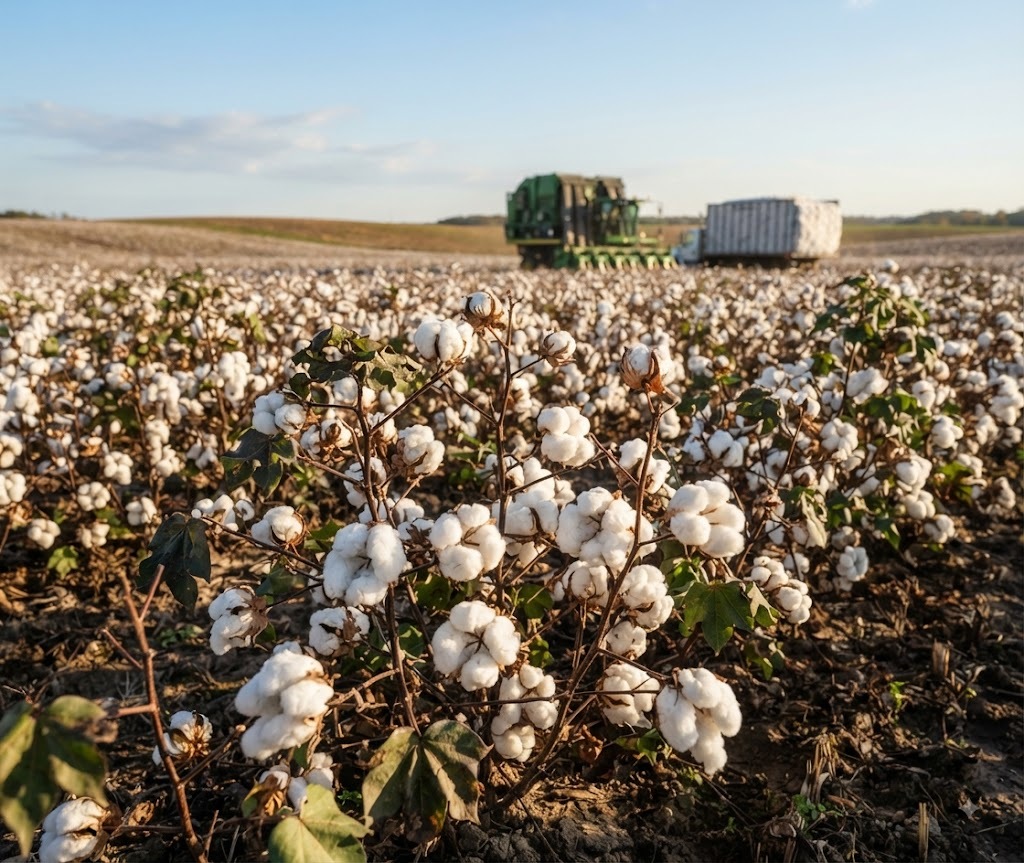
Cotton holds a special position within the Food Plant Library. While its primary economic value comes from the fiber Cotton Lint, the Cottonseed separated during the ginning process forms an independent product chain consisting of Cottonseed Oil, Cottonseed Meal, and Linters . The USDA explains that Cottonseed Oil can be used as edible oil, while emphasizing that Gossypol management is essential. ( USDA )
Basic fields | detail |
| Korean name | cotton |
| English name | Cotton |
| Representative scientific name | Gossypium hirsutum L. |
| Major Species | Gossypium barbadense L. et al. |
| classification | Malvaceae, genus Gossypium |
| Edible parts | Food Supply Chain Standards: Oils extracted and refined from seeds |
| Non-edible · Separate management | Lint, Linters, Stems, Leaves, Burr, Hull, etc. |
| Major harvesting stages | Flowering → Boll formation → Seed and fiber development → Boll decongestion → Seed cotton harvesting |
| Basic product form | Seed Cotton·Lint·Cottonseed·Kernel/Meat·Crude Oil·Refined Oil·Meal·Hull·Linter |
| Basic processing stage | Harvesting · Drying/Moisture Adjustment · Ginning · Delinting · Dehulling · Flaking · Pressing/Extraction · Refining |
| Basic use | Fibers, edible oils, feed ingredients, cellulose, industrial materials |
| Similarity Principle | Separating the purposes of Species and Fiber/Oil/Seed, and not equating Cottonseed with Lint yield. |
The USDA ERS classifies Upland Cotton as Gossypium hirsutum and Pima Cotton as Gossypium barbadense, and manages the fiber length and end use of the two species separately. ( Economic Research Service )
Product Master
Product ID | Actual product form | Key Management Standards |
| COTTON-P01 | seeds for cultivation | Species·Cultivar·Seed Lot·Germination Rate |
| COTTON-P02 | Seed Cotton | Moisture · Foreign matter · Boll maturation · Origin |
| COTTON-P03 | Ginned Cotton Lint | Fiber Length·Strength·Color·Trash |
| COTTON-P04 | Raw Cottonseed | Ginning Lot · Moisture · Foreign Matter · Seed Filling |
| COTTON-P05 | Delinted Cottonseed | Residual Linter, Moisture, Purity |
| COTTON-P06 | Dehulled Cottonseed Meat | Hull Removal · Gossypol Management |
| COTTON-P07 | Cottonseed Flake | Moisture, thickness, processing history |
| COTTON-P08 | Crude Cottonseed Oil | Oil Yield · Gossypol · Impurities |
| COTTON-P09 | Refined Cottonseed Oil | Refining history and food standards |
| COTTON-P10 | Foodservice Cottonseed Oil | Maintenance Quality, Packaging, Delivery Time |
| COTTON-P11 | Cottonseed Meal | Protein·Moisture·Gossypol |
| COTTON-P12 | Cottonseed Hull | Fiber, Moisture, and Feed Suitability |
| COTTON-P13 | Cotton Linters | Cellulose Grade · Fiber Length |
| COTTON-P14 | Gin By-product | Trash, Burr, Stem, etc. |
| COTTON-P15 | High-oleic cottonseed oil | Cultivar/Line·Fatty Acid Profile |
| COTTON-P16 | PB/Food-grade cottonseed oil | Origin · Lot · Refined · Labeling |
Classification criteria | Subdivision type | Management principles |
| Plant classification | G. hirsutum, G. barbadense, etc. | Species ID |
| Cultivar | Fiber, Oil, High Oleic, etc. | Cultivar/Line |
| production purpose | Lint Center · Seed/Oil By-products · Specialty Oils | Use Type |
| Harvesting stage | Green Boll · Mature/Open Boll | Harvest Stage |
| Raw material form | Seed Cotton · Lint · Cottonseed | Product Separation |
| Seed processing | Whole·Delinted·Dehulled·Flaked | Process ID |
| Maintenance form | Crude · Refined · High Oleic | Product Separation |
| by-product | Meal·Hull·Linters·Gin Waste | Separation of Entities |
| Final use | Textile·Food Oil·Feed·Cellulose·Industrial | Buyer Spec |
| Transaction type | Farm → Gin·Cottonseed Processor·Oil Refiner·Bulk·OEM/PB | Verified/NDA |
step | Essential Dataset | Management purpose |
| Cultivation plan | Species·Cultivar·Fiber/Oil Purpose·Area | Production plan |
| satellite | Seed Lot · Germination Rate | breed tracking |
| sowing | Sowing date and density | Field Lot |
| budding | Budding rate · Hair emergence | Early growth |
| Vegetative growth | Starter · Node · Branch | Yield Forecast |
| rising | Temperature, rainfall, drought, typhoon | Crop Risk |
| soil | Soil, moisture, and drainage | productivity |
| Watering | Soil moisture and irrigation amount | Growth stability |
| dispute | Input amount and timing | Production history |
| weeds | Occurrence and Control | productivity |
| pests | Occurrence and Control | Fiber/Seed Quality |
| Squaring | Fire Thunder Water | Yield Forecast |
| flowering | Flowering Date · Flower Count | Boll Forecast |
| Boll formation | Boll Number | Production forecast |
| development of seeds and fibers | Boll Growth | Lint/Seed Yield |
| Boll maturation | Maturity | Harvest Timing |
| Rewriting | Open Boll Rate | Harvest judgment |
| harvest | Date and Method | Seed Cotton Lot |
| Mountain dryness and humidity | moisture | Ginning Quality |
| Ginning | Lint/Seed Separation | Key quarter |
| Lint Cleaning | Trash·Grade | Fiber Product |
| Cottonseed Jeongseon | foreign matter/moisture | Oilseed Grade |
| Delinting | Remove Linter | Seed Processing |
| Dehulling | Hull/Meat Separation | Oil/Meal |
| Flaking | Seed Meat Processing | Extraction |
| extraction | Oil/Meal Separation | Oil Yield |
| crude oil refining | Gossypol · Impurity Removal | Food Grade |
| Meal processing | Protein·Gossypol Management | Feed Grade |
| Storage and Packaging | By Product | Quality |
| shipment | Buyer·Lot | Delivery |
Quality items | Seed Cotton/Cottonseed | Preprocessing · Meal | Cottonseed Oil | finished product | Public rating |
| Species | essential | succession | succession | tracking | Public |
| Cultivar | essential | succession | tracking | tracking | Verified |
| mountainous district | essential | succession | succession | mark | Public |
| farmhouse | ID | tracking | tracking | - | Verified |
| Field Lot | essential | succession | succession | tracking | Verified |
| Gin Lot | essential | succession | succession | tracking | Verified/NDA |
| Harvest day | essential | succession | succession | - | Verified |
| moisture | core | core | By product | standard | Verified |
| Boll/Seed maturation | core | Raw material history | Yield connection | - | Verified |
| Foreign matter/Trash | core | core | Filtration management | Product Standards | Verified |
| Lint quality | Fiber Grade | - | - | textile products | Verified |
| Royal fidelity | core | core | Oil Yield | - | Verified |
| Damaged lip | check | core | Quality Connection | - | Verified |
| Oil Content | Cottonseed core | Residual oil | Yield | - | Verified/NDA |
| Protein | Seed characteristics | Meal Key Points | - | Feed Spec | Verified |
| Gossypol | Raw material verification | core | Refining and safety are key | Conformity to standards | Verified/NDA |
| Fatty Acid Profile | Raw material characteristics | - | core | Product specifications | Verified/NDA |
| pesticide residues | Legal standards | succession | check | Legal standards | Verified/NDA |
| microorganism | Raw material status | Meal/Food Ingredients | If necessary | Product Standards | Verified/NDA |
| Milking yield | - | - | core | Cost linkage | NDA |
| Acid value, peroxide, etc. | - | - | core | Product specifications | Verified/NDA |
| Refining history | - | - | essential | tracking | NDA |
| Processing history | Ginning | Delint/Dehull | Extraction/Refining | essential | NDA |
| packaging | Bale/Bulk | Bulk | Tank/Bottle | Labeling packaging | Member |
| save | Cottonseed | Meal | Tank | By product | Verified |
| Expiration date | - | By product | By product | mark | Verified |
| Shipment | record | record | record | record | Verified |
| Returns and Claims | record | record | record | record | NDA |
| Repurchase | connection | connection | connection | connection | NDA |
Gossypol is a critical risk factor in the cottonseed food/feed chain. The USDA ARS explains that the use of standard cottonseed meal may be limited due to gossypol residue and is conducting research on breed improvement and processing to reduce it. ( ARS )
Lot Master Required Field
Lot ID · Item · Product Type · Species · Scientific Name · Cultivar · Fiber/Oil Production Purpose · Cultivation Type · Origin · Field · Producer · Seed Lot · Sowing Date · Flowering Date · Boll Maturity · Opening Date · Harvest Date · Seed Cotton Weight · Moisture · Trash · Pests & Diseases · Appearance · Pesticide Usage Records · Pesticide Residue Test Report · Gin ID · Ginning Date · Lint Weight · Grade · Cottonseed Weight · Cottonseed Moisture · Oil Content · Protein · Gossypol · Delinting/Dehulling Lot · Kernel/Meat Lot · Crushing Lot · Oil Yield · Crude Oil Lot · Gossypol/Oil Quality Test Report · Refining Lot · Refined Oil Lot · Meal/Hull/Linter Lot · Packaging Date · Shipper · Returns · Claims · Repurchase
Customers | Purchase criteria | Cooperation opportunities |
| cotton farmers | Species·Cultivar·Fiber Grade | contract farming |
| Local specialty cotton business | Variety · Cultivation · Culture · Product | Regional Product |
| Cotton ginning company | Seed Cotton Moisture & Trash | Gin RFQ |
| spinning and textile companies | Lint Length·Strength·Grade | Textile RFQ |
| Cottonseed Processor | Moisture · Oil Content · Gossypol | Seed RFQ |
| milking company | Oil Content · Foreign Matter · Volume | Crushing |
| edible oil manufacturers | Crude/Refined Oil Quality | Oil Supply |
| Food manufacturer | Refined Cottonseed Oil | Ingredient |
| Eating Out · Fried Foods | Maintenance stability · Delivery time | Foodservice |
| feed companies | Cottonseed Meal·Hull | Feed RFQ |
| Cellulose company | Linters | Material RFQ |
| Agricultural and Horticultural Materials | Gin By-product | Circular Product |
| Large-scale distribution | Finished edible oil products | Retail |
| PB·OEM | cottonseed oil | Manufacturing |
| importer | Cottonseed/Oil/Origin | Trade RFQ |
| Research Institute | Low Gossypol·High Oleic·Fiber/Oil | R&D Pilot |
step | Key variables | Operational judgment |
| Production in the producing region | Country · Species · Crop Year | Global Supply |
| Seed Cotton Harvest | Moisture · Trash · Yield | Farm Value |
| Ginning | Gin Outturn · Lint/Seed Separation | Value Split |
| Lint market | Grade · Fiber Quality | Textile Market |
| Cottonseed procurement | Seed Quantity · Oil Content | Oilseed Supply |
| Seed Processing | Delint Dehull | Extraction |
| milking | Oil Yield · Gossypol | Oil Economics |
| Meal production | Protein·Gossypol | Feed Market |
| tablet | Food Safety · Yield | Food Oil |
| Imports and exports | Lint·Seed·Oil·Meal·HS | Trade |
| Domestic supply | Food/Feed/Textile | Buyer Allocation |
| RFQ · Repurchase | Quality, Yield, Price | Supplier Ranking |
The FAO stipulates that seed cotton and cotton lint must be distinguished in cotton statistics. Therefore, it is erroneous to directly use cotton production volume as the raw material volume for cottonseed oil. ( FAOHome )
Import and export management
item | Management principles |
| Seed Cotton | Current HSK verification |
| Cotton Lint | Fiber HS separate |
| Cottonseed | Check HS separately for sesame seeds |
| Cottonseed for Sowing | Separated from regular cottonseed |
| Crude Cottonseed Oil | Check crude oil three times |
| Refined Cottonseed Oil | Refined oil must be checked separately. |
| Cottonseed Meal/Cake | Oilseed meal separate HS |
| Cotton Linters | Classified separately from Lint |
| Korea's import volume | Input after verification of raw data by the Korea Customs Service for 2025/2026 |
| Korean import value | Input after official verification of raw data |
| Major suppliers | Enter after verifying HS, Country, Weight, and Value |
| FTA | Country of Origin by Product State and Origin |
| Quarantine | Checking quarantine conditions for seeds for sowing and unprocessed seeds |
| Food inspection | Check the latest Food Code standards for cottonseed oil |
| Customs clearance unit price | Calculate Lint, Seed, Crude Oil, Refined Oil, and Meal separately |
Products and processes | Key conditions | RFQ conversion |
| Seed Cotton | Moisture·Trash·Cultivar | Gin RFQ |
| Cotton Lint | Length·Strength·Color | Textile RFQ |
| Raw Cottonseed | Oil·Protein·Gossypol | Crusher RFQ |
| Delinted Seed | Linter Removal | Processing |
| Cotton Linters | Cellulose Grade | Material Buyer |
| Hull | Fiber·Moisture | Feed/Material |
| Kernel/Meat | Gossypol·Oil | Extraction |
| Flaked Seed Meat | Thickness · Moisture | Crusher |
| Crude Cottonseed Oil | Gossypol Oil Quality | Refinery |
| Refined Cottonseed Oil | Food Grade | Food Manufacturer |
| High-oleic oil | Fatty Acid Profile | Specialty Oil |
| Cottonseed Meal | Protein·Residual Oil·Gossypol | Feed RFQ |
| Gin Trash | Composition · Contamination | Fertilizer/Material Verification |
| Stalk Residue | Biomass | Circular Use |
| Unsuitable Oil/Meal | Gossypol · pollution | Food Chain Exclusion |
The USDA ARS has been conducting research on processes for the adsorption and removal of gossypol from crude cottonseed oil and the reduction of residual gossypol in cottonseed meal. Therefore, the gossypol result in the Crude Oil → Refining → Food-grade Oil stages is designated as a core release field. ( ARS )
The USDA's 2026 study is developing seed oil for the high-oleic cotton line, so High Oleic Cottonseed Oil PRP can also be operated as a separate product in the long term. ( ARS )
Product Research Profile (PRP)
PRP area | Key question |
| Species | Which species is it, G. hirsutum or G. barbadense? |
| Cultivar | What are the fiber quality and seed/oil yield characteristics? |
| Seed Cotton | Is the moisture, trash, and boil maturity suitable? |
| Ginning | What is the amount of lint and cottonseed recovered relative to the input of seed cotton? |
| Lint | Does the fiber grade meet the buyer's requirements? |
| Cottonseed | What are the levels of Oil, Protein, and Gossypol? |
| Delinting | What are the Linters recovery rates and seed damage? |
| Dehulling | What is the Kernel/Hull recovery structure like? |
| Oil Content | What is the oil potential per kg of cottonseed? |
| Gossypol | How does it change at each stage: Raw Seed, Meal, and Oil? |
| Crushing | What is the crude oil yield relative to cottonseed? |
| Refining | Are gossypol and impurities in crude food oil managed at appropriate levels? |
| Fatty Acid | Is Standard/High Oleic Oil clearly distinguished? |
| Meal | Is Protein·Gossypol suitable for the final use? |
| Linters | Is it suitable for Cellulose/Fiber Buyer Spec? |
| Buyer | How do Lint Grade, Oil Yield, Safety, and Delivery Time Affect Repurchase? |
first of all | Execution item | Performance indicators |
| 1 | Species·Cultivar·Origin·Harvest Date·Seed Cotton Lot required | Required value completion rate |
| 2 | Seed Cotton·Lint·Cottonseed·Oil·Meal·Linter Product Separation | Product identification rate |
| 3 | Linking Weather, Growth, Boll, Harvest, and Ginning data | Production history connection rate |
| 4 | Datafication of quality, test reports, Gossypol, milking, and refining history | Traceability rate |
| 5 | Farm – Gin – Seed Processor – Oil/Feed/Textile Buyer RFQ Connection | RFQ Match Rate |
| 6 | Video AI Boll Improvement Rate Judgment | Harvest judgment accuracy |
| 7 | Video AI Seed Cotton Trash Judgment | Grade Accuracy |
| 8 | AI Cotton Fiber Grade Auxiliary Judgment | Error compared to Lab/instrument |
| 9 | Pest and disease AI diagnosis | Early detection rate |
| 10 | Seed Cotton Yield Prediction | Error compared to the actual |
| 11 | Lint Yield prediction | Gin error compared to performance |
| 12 | Cottonseed Yield Prediction | Gin error compared to performance |
| 13 | NIR Oil Content Prediction | Error compared to Lab |
| 14 | Gossypol Risk Assessment | Non-compliant blocking rate |
| 15 | Crushing Yield Prediction | Error compared to the actual |
| 16 | High Oleic Oil Automatic Classification | Profile Judgment Rate |
| 17 | Gin By-product Allocation | By-product recovery rate |
| 18 | AI Supplier/Buyer Match | Sample→Contract Conversion Rate |
| 19 | Field→Oil/Lint Traceability | traceability |
Problem group | Problem Definition | Required data |
| Mixed Species | Manage Upland, Pima, etc. with the same cotton | Species |
| Mixed fiber/oil roles | Does not separate the value of fiber and cottonseed | Product Split |
| Unclear domestic production base | Need to verify the latest commercial cultivation scale | Area·Production |
| Climate Risk | Impact of high temperatures, rainfall, drought, and typhoons | Climate |
| pests | Boil, Fiber, and Seed quality degradation | Pest/Disease |
| Boll maturity deviation | Harvest time · Seed/Lint quality variation | Maturity |
| Harvest loss | Fallen cotton and pollution after reclamation | Harvest |
| Seed Cotton moisture | Ginning quality degradation | Moisture |
| Trash | Lint Grade · Gin Efficiency decrease | Trash |
| Starting Yield deviation | Changes in Lint/Cottonseed Recovery Economy | Gin Data |
| Cottonseed quality variation | Difference between Oil and Protein | Seed Quality |
| Oil Content Variation | Changes in milking economics | Oil Content |
| Gossypol | Key Food/Feed Safety Risks | Gossypol |
| Variation in milking yield | Crude Oil Cost Difference | Crushing Yield |
| Refining safety | Verification of food-grade conversion required | Refining |
| Lint–Seed Lot Disconnection | Difficulty tracing back the same Field Origin | Relationship |
| Meal usage restrictions | The scope of application changes with Gossypol | Meal Quality |
| Linters low value | Cellulose byproduct value not reflected | Linter |
| Cotton statistical mixture | Seed Cotton·Lint·Cottonseed confusion | FAO Classification |
| International price fluctuations | Fiber/Oilseed Value Fluctuation | Market |
| Repurchase not reflected | Textile and Oil Buyer evaluations not returned to farms | Evaluation/Reorder |
RFQ Type | Public Registration | Verify/NDA |
| Seed Cotton Contract Farming | Species·Cultivar·Region | Farms, Area, Unit Price |
| Seed Cotton for Sale | Moisture · Trash · Harvest | Physical quantity and price |
| Ginning | Seed Cotton Grade | Gin conditions and yield |
| Cotton Lint for sale | Fiber Grade | Bale·Actual Price |
| Cottonseed sales | Origin·Moisture | Oil·Protein·Gossypol |
| Cottonseed purchase | Oilseed Grade | MOQ · Actual Unit Price |
| Seeds for milking | Oil Content · Gossypol | Crushing Spec |
| Crude Cottonseed Oil | Origin·Oil Lot | Report |
| Refined Cottonseed Oil | Food Grade | Bulk Contract |
| High Oleic Oil | Fatty Acid Profile | Specialty Buyer |
| Oil for food manufacturing | Maintenance Standards · Delivery Date | Regular supply |
| Dining Out & School Meals | Oil Spec·Packaging | Foodservice |
| PB·OEM | cottonseed oil | Manufacturing conditions |
| Cottonseed Meal | Protein·Gossypol | Feed Contract |
| Cottonseed Hull | Fiber · Moisture | Feed RFQ |
| Cotton Linters | Cellulose Grade | Material RFQ |
| import | Lint/Seed/Oil·Origin | Exporter·Freight |
| export | Product·HS·Spec | Contract |
| Technology demonstration | Ginning·NIR·Gossypol·Oil | Pilot |
| Research cooperation | Cultivar·Fiber·Oil·Gossypol | Dataset·IP |
① Need Products & Materials
Companies and institutions seeking necessary products, agricultural products, raw materials, and processed goods register purchasing demands. Registered requests are utilized to review cooperation with potential suppliers and producers based on the RFQ Intelligence Library.
Process:
RFQ Registration → Supplier/Product Review → Collaboration Connection → Future AI Matching
Register
② We are looking for production and manufacturing partners. (Need Suppliers & Manufacturers)
Register a request to find necessary production and supply partners, ranging from farms and producer organizations to processing companies, OEM, ODM, and private label manufacturers.
Process:
RFQ Registration → Review of Production & Manufacturing Capabilities → Collaboration Connection → Future AI Partner Matching
Register
③ We are looking for domestic and international buyers. (Need Buyers)
Farmers, producer organizations, and manufacturing companies are requesting cooperation with new buyers, such as domestic and international distributors, importers, brand companies, and food service and catering businesses.
Process:
RFQ Registration → Product & Supply Capability Review → Market & Buyer Connection → Future AI Buyer Matching
Register
Contact : mail@markethub.org
Version | Main contents | situation |
| v1.0 | Plant Identity · Species Separation · Seed Cotton · Lint · Cottonseed · Cottonseed Oil · Meal · Linter · Gossypol · RFQ Basic Structure Registration | complete |
| v1.1 | Domestic Production Statistics · Cultivar · FAOSTAT · Current HS · Korean Import/Export · Verification of Latest Raw Data for the Food Code | expected |
| v2.0 | Boll·Seed Cotton Quality·Gin Outturn·Fiber Grade·Oil Content·Protein·Gossypol·Crushing/Refining Yield Segmentation | expected |
| v3.0 | Seed Supplier–Farmer–Gin–Cottonseed Processor–Oil Refinery–Textile/Feed/Food Manufacturer–Importer–Food Service·Retail Buyer Verified Container Combination | expected |