


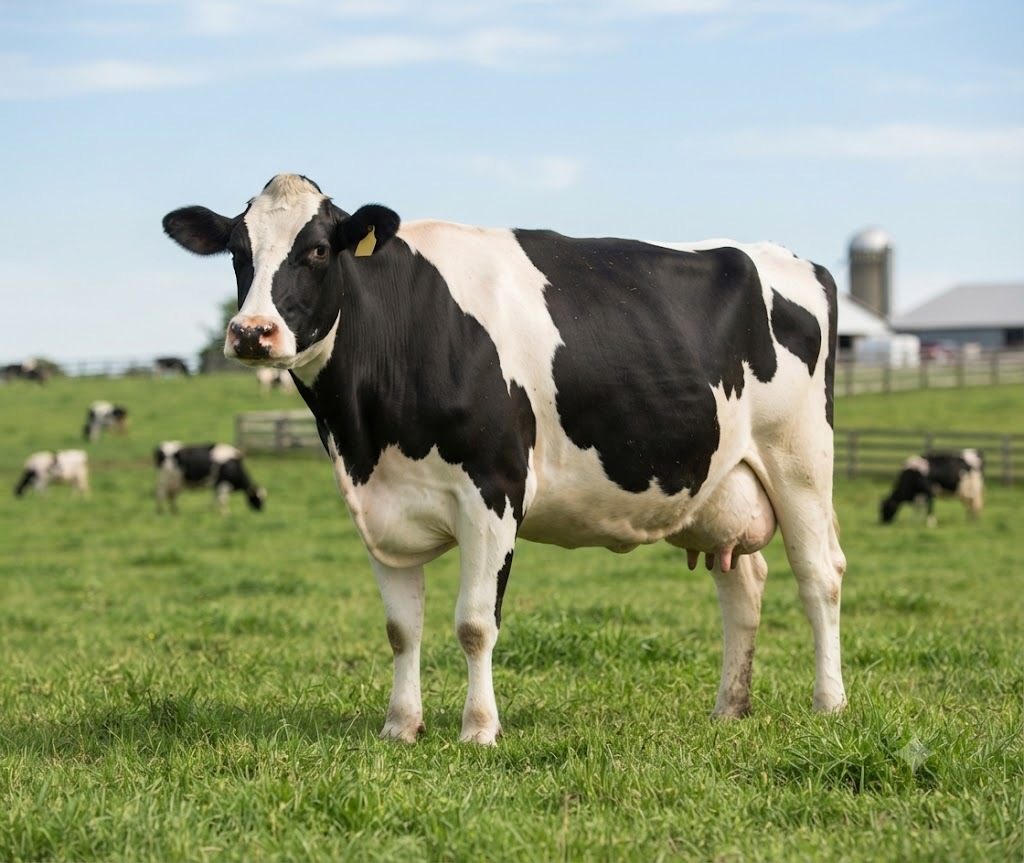
Cattle are the representative livestock species in the Korean livestock industry, classified into Hanwoo, beef cattle, and dairy cattle to produce beef and raw milk, and connecting to the breeding industry through calves, breeding cows, semen, and fertilized eggs. From a farmer's perspective, actual income is achieved not only by securing high-quality individuals but also by managing breeding, feed, disease, growth, and shipment together.
MarketHub does not view cattle simply as 'livestock that produce beef.' It views the entire supply chain —breeding → feed → rearing → health → shipment → slaughter/milk collection → product → buyer— as a single entity, with the goal of connecting improved farm productivity with stable transactions.
Judgment axis | Key points |
| Production type | Korean native cattle, beef cattle, and dairy cows |
| major products | Calves, live livestock, beef, raw milk, breeding resources |
| production core | Breeding, Feed, Growth, Health, Shipment |
| Major risks | Foot-and-mouth disease, brucellosis, tuberculosis, etc. |
| quality | Carcass grade, meat quality, and raw milk quality |
| Major costs | Feed, labor costs, energy, and veterinary costs |
| environment | Manure, foul odors, heatwaves, greenhouse gases |
| AX | Linking breeding, feed, health, weight, and shipment data |
| RFQ | Livestock · Breeding Resources · Beef · Raw Milk · Feed · Processing · Buyer |
| Final goal | Improved productivity and stable sales |
In 2026, reducing production costs and shortening the production period are particularly critical issues. The government is also promoting the distribution of short-term fattened Hanwoo to improve the production structure centered on long-term fattening, citing the reduction of production costs, such as feed expenses, through the shortening of the rearing period as a major benefit. ( Mafra )
Korea's cattle industry is easiest to understand in the field by broadly dividing it into Hanwoo, beef cattle, and dairy cattle . The National Livestock Trend Survey also classifies Hanwoo as cattle meeting Hanwoo standards, beef cattle as cattle raised for the production and sale of beef, and dairy cattle as cattle being milked or raised for milking. ( KOSIS )
Beef and milk are not the only things obtained from cows. There are reproductive resources such as calves, breeding cows, semen, and fertilized eggs; after slaughter, offal, fat, bones, and hides are produced, and manure can also be converted into compost or energy resources.
division | Main purpose | major products |
| Korean beef | Meat and breeding | Calf, live meat, beef |
| beef | meat | Livestock and beef |
| dairy | Dairy and breeding | Raw milk and calves |
| breeding stock | Improvement and breeding | Bulls, breeding cows, semen, fertilized eggs |
| by-product | Food, Industry, and Resource Recovery | Internal organs, fat, bones, skin, and manure |
Therefore, MarketHub has cattle as a single Livestock Master and connects beef, raw milk, calves, semen, fertilized eggs, etc., as separate Product Entities .
When analyzing cattle, breed and production purpose should not be treated as the same concept. Terms such as Hanwoo, Holstein, and Angus refer to breeds or lineages, whereas terms like beef, dairy, and breeding refer to the purpose for which the cattle are raised.
As the purpose of production changes, the management requirements for farms also change. For beef cattle, growth, feed efficiency, market time, and carcass performance are important; for dairy cows, milk yield, milk quality, reproduction, and udder health are important; and for breeding cows, pregnancy, calving, and calf production capacity are important.
division | example | On-site management |
| livestock species | cow | Cattle |
| Variety/Type | Korean beef, Holstein, etc. | Genetics/Traits |
| production purpose | Meat, Dairy, Breeding | Farm operation method |
| production stage | Calf, Growing, Fattening, Milking | Step-by-step management |
| product | Beef, raw milk, and breeding resources | Quality and Standards |
| Customers | Farming, Processing, Distribution, Food Service | Buyer's Requirements |
The basic connection structure is livestock type → breed/type → production purpose → production stage → product → Buyer .
While the productivity of cattle farming begins with securing high-quality calves, a farm's performance is not determined solely by breeding results. Actual farm income is achieved only when feed costs, growth rate, health status, rearing environment, and timing of shipment all align.
Therefore, it is important to examine feed intake, body weight changes, diseases, slaughter age, and carcass performance together with breeding records. For dairy cows, factors such as milk yield, quality, and milking duration should be linked to these indicators to analyze differences in productivity among farms.
Management area | Things to see at a farm |
| breeding | Estrus, fertilization, pregnancy, childbirth |
| calf | Birth, Colostrum, Growth, Disease |
| feedstuff | Forage, mixed feed, feeding quantity, price |
| growth | Weight, Weight Gain, and Shipment Age |
| dairy | Milk production, milk quality, and reproduction |
| health | Disease, Vaccine, Treatment |
| environment | Temperature, humidity, ventilation, and water supply |
| expense | Feed, labor costs, veterinary care, energy |
For Hanwoo, the rearing period itself is a significant variable directly linked to production costs. The Ministry of Agriculture, Food and Rural Affairs’ push to expand short-term fattening Hanwoo by 2026 is also part of an effort to improve the production structure aimed at lowering production costs, such as feed expenses, by reducing the rearing period. ( Mafra )
The quality, health, and disease control of cattle are not separate issues. Since an outbreak can affect not only the productivity of individual cattle but also farm movement, shipment, slaughter, and local livestock trade, regular record-keeping and disease control management are crucial.
At farms, a basic history must be maintained from birth through transportation, breeding, vaccination, inspection, and shipment. After slaughter, it must be possible to trace which carcass and product the individual was connected to in order to compare the farm's rearing methods and final quality.
step | Key Management |
| birth | Individual Number · Breed · Parents |
| breeding | Fertilization, Pregnancy, and Childbirth |
| breeding | Feed, Weight, Health |
| Disinfection | Vaccine, Test, Disease |
| movement | Farm transfer and shipment |
| slaughter | Conductor Number/Grade |
| process | Part/Product Lot |
| circulation | Storage · Logistics · Buyer |
In 2026, 626 cattle were culled domestically due to an outbreak of foot-and-mouth disease; the Ministry of Agriculture, Food and Rural Affairs assessed that the impact on supply and prices was limited, noting that this represented approximately 0.02% of the total cattle population at the time. As disease situations are constantly changing, MarketHub manages outbreak areas, quarantine measures, and movement restrictions as runtime data rather than fixed information. ( Mafra )
The cattle industry does not end at the farm. Starting from breeding farms, fattening farms, and dairy farms, it forms an industrial network extending to feed companies, animal pharmaceutical companies, slaughterhouses, milk collection agencies, meat processing, dairy processing, distribution, the food service industry, and food companies.
From the perspective of farmers, it is crucial to know what the buyer at the end of this supply chain wants. MarketHub does not stop at simply accumulating production information; it identifies the gap in requirements between farmers and actual buyers and connects them via RFQs.
Participants | Things needed | Possibility of cooperation |
| Hanwoo and beef cattle farms | Calves, Feed, and Shipment Locations | Production and Shipment RFQ |
| dairy farmer | Feed, breeding, and raw milk sales | Dairy RFQ |
| livestock breeding companies | Superior genetic resources | Breeding |
| slaughter and processing companies | Stable shipment volume | supply contract |
| Dairy processing company | stable crude oil | Regular supply |
| Food and restaurant companies | Specifications, Quality, and Quantity | Buyer RFQ |
| import and export companies | Price, Quarantine, and Volume | Trade RFQ |
| local government | Productivity, Disease Control, Environment | Regional AX |
According to the National Approved Statistics of the Korea Animal Products Quality Evaluation Institute for July 2026, the volume of graded cattle was 77,898, of which 68,754 were Hanwoo. In the same month, the wholesale auction price for Hanwoo was 21,778 won per kg, 20.8% higher than the same month of the previous year. As prices and shipment volumes are constantly changing, these figures are used only as runtime reference values for July 2026. ( Korea Animal Products Quality Evaluation Institute )
Beef cattle are shipped from farms and delivered to consumers and buyers after undergoing slaughter, grading, processing, and distribution. Dairy cows, on the other hand, go through milk collection, inspection, and processing after milking; therefore, even for the same type of cattle, the supply chain varies significantly depending on the production purpose.
In international trade, a transaction cannot be concluded simply because the price is right. Since the feasibility of trading live animals, beef, and breeding resources varies depending on the country's livestock disease situation, quarantine conditions, approved facilities, country of origin, and product type, the destination country's conditions must be reconfirmed when an RFQ is received.
Meat: Farm → Shipment → Slaughter → Grading → Processing → Distribution → Buyer
Dairy Farming: Farm → Milking → Milk Collection → Inspection → Milk Processing → Distribution → Buyer
Confirmation area | Main contents |
| product | Live animals, beef, breeding resources, etc. |
| origin | Country·Region·Farm |
| quality | Grade, Part, Weight |
| Quarantine | Disease and hygiene conditions by country |
| trade | HS·FTA·Customs·Origin |
| distribution | Refrigeration, freezing, and transportation |
| Buyer | Specifications, Quantity, Delivery Date, Price |
In particular, since disease outbreaks can affect the international movement of live animals and livestock products, it is a principle to reconfirm quarantine conditions immediately before the actual contract .
The industrial value generated from a single cow does not end with beef alone. In the meat industry, it yields various cuts of beef and edible by-products; in the dairy industry, it connects to diverse dairy product industries based on raw milk; and in the breeding industry, semen and fertilized eggs are also important products.
A Product Research Profile (PRP) is not merely a process of registering such products, but rather an analysis of whether what a farm produces meets the conditions desired by buyers . It also examines whether better deals are possible by changing production methods, rearing periods, quality, or specifications.
product | Main uses |
| calves and livestock | Breeding and fattening |
| beef | Distribution, Food Service, Food |
| crude oil | Dairy processing |
| Sperm and fertilized egg | Breeding and improvement |
| Organs, fat, and bones | Food and Processing |
| leather | industrial materials |
| excretions | Compost and energy |
Key PRP questions include whether feed costs can be reduced, whether the shipping age can be shortened, why carcass performance varies by farm, and whether the quality desired by buyers can be consistently produced .
The purpose of Livestock AX is not to install a large amount of AI equipment on farms. The core is to use data to detect changes that farmers might easily miss, and to enable them to make better decisions regarding production costs, diseases, breeding, and timing of shipment.
Since cattle can be managed on an individual basis, linking data on reproduction, weight, feed, behavior, health, and carcass yields high utility. In particular, livestock breeding itself is rapidly shifting toward a data-centric model, with the early selection of genome-based bulls expanding from Hanwoo to dairy cows by 2026. ( Mafra )
Apply AX | farm effect |
| Estrus and breeding detection | Improvement of breeding management |
| Automatic weight | Check growth status |
| feed data | Feed efficiency management |
| Behavioral and Rumination Sensors | Early detection of health problems |
| Temperature and humidity sensor | Response to heatwaves and cold waves |
| Conductor information feedback | Improvement of breeding methods |
| Price Runtime | Determining the shipping time |
| Buyer Matching | Expansion of sales channels |
In fact, the government has initiated a system to reduce the selection period for Hanwoo bulls from the existing approximately five years to about one year by introducing genomic analysis in 2026. This is an example demonstrating that Livestock AX is expanding from simple automation to decision-making based on genetic and production data . ( Mafra )
In cattle farming, issues such as rising feed costs, declining breeding rates, calf mortality, long rearing periods, disease, heatwaves, manure and odors, and labor shortages occur repeatedly. The important thing is not to leave these problems solely to the individual farmer's experience or luck.
If the same problem recurs across multiple farms, the cause can be identified by comparing data from each farm. Subsequently, if the solution is verified by comparing it with production methods from exemplary farms or other regions, it can be developed into a regional livestock AX business.
problem | Data to verify |
| Rise in feed costs | Feed price, intake, and weight gain |
| Decrease in breeding rate | Estrus, fertilization, pregnancy |
| calf death | Birth, Colostrum, Disease |
| long rearing period | Growth, Feed, and Shipment Age |
| Conductor performance deviation | Farms, feed, shipments |
| disease | Vaccines, Testing, and Movement |
| heatwave | Temperature, intake, weight gain, and oil production |
| Foul odor and manure | Livestock barn and manure treatment |
| Sales problem | Price · Product · Buyer |
The basic structure is problem identification → data verification → cause analysis → solution → farm demonstration → commercialization .
MarketHub RFQs are not limited to the function of selling beef produced by farms. Seeking calves, breeding stock, semen, fertilized eggs, or feed, or seeking slaughter and processing partners for contract production, smart livestock demonstration projects, or manure resource utilization businesses can also be considered RFQs.
There is no need to disclose all information about the farm. Items, regions, and willingness to cooperate are disclosed publicly, but actual production volume, prices, contract conditions, and internal farm productivity data are shared restrictively at the Verified or NDA stage.
RFQ Type | Collaboration Examples |
| calves and livestock | Buying and selling |
| breeding stock | Breeding cows and bulls |
| Sperm and fertilized egg | Improvement and breeding |
| feedstuff | roughage and compound feed |
| shipment | Slaughter and joint shipment |
| beef | Supply by part and grade |
| crude oil | Regular supply |
| contract production | Farms ↔ Businesses |
| Import and export | Live animals, livestock products, and breeding resources |
| AX Demonstration | Farms, companies, and research institutions |
| environment | Odor and manure resource recovery |
MarketHub operates by reviewing production capacity, quality, disease prevention, supply continuity, and Buyer requirements together, rather than selecting suppliers based solely on price.
MarketHub Livestock Library is not a database where you simply read livestock information and stop there. The core of RFQ is for farmers, companies, and buyers to first register what they need , and then connect those requests with producers, suppliers, and processing companies.
In the cattle industry, a wide range of requests can arise, extending from live animals to feed, beef, raw milk, breeding resources, processing, and technology. Therefore, product purchasing, production partners, and buyer acquisition are managed separately.
① Find products/raw materials.
Need Products & Materials
Companies and institutions seeking necessary live animals, livestock products, feed, raw materials, and breeding resources register their purchase demands. MarketHub verifies basic conditions such as item, specifications, quantity, and region, and reviews the potential for cooperation with available producers and companies.
RFQ Registration → Supply Feasibility Review → Connecting Producers and Companies → AI Matching
Register
② We are looking for production and manufacturing partners.
Need Suppliers & Manufacturers
We seek necessary production and supply partners, including farms, producer organizations, slaughterhouses, processors, OEM, and ODM companies. We go beyond simple company searches by verifying production capabilities and supply conditions to assess the feasibility of actual collaboration.
RFQ Registration → Production Capability Review → Partner Connection → AI Partner Matching
Register
③ We are looking for domestic and international buyers.
Need Buyers
Farms and production companies seek new buyers, including food companies, distributors, hotels, restaurants, catering services, and importers. After verifying products and consistent supply capabilities, we connect them with suitable markets and buyers.
RFQ Submission → Product & Supply Capability Review → Buyer Connection → AI Buyer Matching
Register
Contact : mail@markethub.org
The dataset is not intended to require complex computational skills from farmers. It is a basic structure designed to connect and utilize continuously changing data—such as breeding, feed, health, shipment, and prices—rather than requiring farmers to input information they have provided once anew every time.
For example, if the carcass performance of Hanwoo is poor, it is difficult to identify the cause by looking only at the final grade. The individual's pedigree, feed, growth, and shipment information must be linked to analyze the cause and reflect it in future rearing.
Dataset | Simply put |
| Master | Standards for livestock type, breed, product, etc. |
| Entity | Actual Farms, Cows, Businesses, Buyers |
| Relationship | The relationship between farms and livestock, products, etc. |
| Runtime | Information that changes like price, weight, and disease |
The representative connections are as follows.
Farm → Cattle → Breeding → Feed → Health → Growth → Shipment → Carcass/Raw Milk → Products → Buyer
Detailed technical fields are not all displayed on the public registration screen but are managed within the MarketHub internal dataset.
When it comes to livestock information, not only the source but also when it was verified is important. This is because while some information, such as the scientific name of a cattle, rarely changes, others—like the number of animals raised, prices, diseases, quarantine, and buyer demand—can vary within a few months or days.
Therefore, MarketHub distinguishes between fixed and runtime information and manages source reliability and verification dates together. For this 001 registration, the latest publicly available data for 2026 from the Ministry of Agriculture, Food and Rural Affairs, the National Livestock Trend Survey, and the Korea Animal Products Quality Evaluation Institute was prioritized for verification. (Korea Animal Products Quality Evaluation Institute )
Evidence | source |
| A | Government, International Organizations, Official Statistics |
| B | Papers · Research Institutes |
| C | Association/Verification Industry Data |
| D | Corporate and Market Data |
| E | Additional verification needed |
Key factual basis
- National Livestock Trend Survey — Official Classification of Hanwoo, Beef Cattle, and Dairy Cattle, and Survey System Based on the Cattle Traceability System. ( KOSIS )
- Korea Animal Products Quality Evaluation Institute “July 2026 Livestock Grading Statistics” — Graded Volume of Cattle and Hanwoo and Auction Prices of Hanwoo. ( Korea Animal Products Quality Evaluation Institute )
- Ministry of Agriculture, Food and Rural Affairs 2026 Livestock Supply and Demand Brief — Outlook for Hanwoo Rearing and Slaughter and Impact of Foot-and-Mouth Disease. ( Mafra )
- Ministry of Agriculture, Food and Rural Affairs Hanwoo Short-term Fattening Policy — Shortening Rearing Period and Reducing Production Costs. ( Mafra )
- Ministry of Agriculture, Food and Rural Affairs: Genome-based Early Selection of Hanwoo and Dairy Cattle Bulls — Changes to the Livestock Improvement System by 2026. ( Mafra )
Version | Main contents | situation |
| v1.0 | First registration based on 2026 precision survey | complete |
| v1.1 | Statistics, Market, Disease, and Quarantine Runtime Update | expected |
| v2.0 | Farm PRP·AX Dataset Linkage | expected |
| v3.0 | Verified Supplier/Buyer Matching | expected |