


Ducks are one of the second most important commercial livestock species in the Korean poultry industry, after chickens, and the entire chain—ranging from breeding ducks, hatching eggs, hatching, rearing, slaughtering, processing, and the food service market—is centered around the production of meat ducks. Since the production cycle is relatively short, feed efficiency and market performance are critical; however, an outbreak of highly pathogenic avian influenza (HPAI) can affect not only farms but also the supply of hatching eggs, chicks, and duck meat.
MarketHub does not view ducks simply as a livestock species for duck meat production. It manages the entire supply chain —from breeding ducks → hatching eggs → hatching → ducklings → feed/rearing → shipment → slaughter/processing → duck meat → distribution/buyer— as a single system, and connects disease control, pricing, and supply and demand information via Runtime.
Judgment axis | Key points |
| Main types | Meat ducks, breeding ducks, and native ducks |
| production core | Hatching eggs, hatching, feed, weight gain, mortality |
| Major risks | HPAI, heatwave, rearing environment |
| Main Products | Ducklings, hatching eggs, duck meat |
| quality | Shipping weight, carcass, meat quality, hygiene |
| market | Foodservice, Food, Processing, Distribution |
| AX | Environment, drinking water, food, body weight, behavior |
| RFQ | Hatching eggs, ducklings, feed, live animals, meat |
| Final goal | Simultaneous improvement of productivity, disease control, and sales channels |
For ducks, it is important to manage a stable supply of hatching eggs and ducklings, disease control, planned shipments, and buyer demand together , rather than simply increasing production volume.
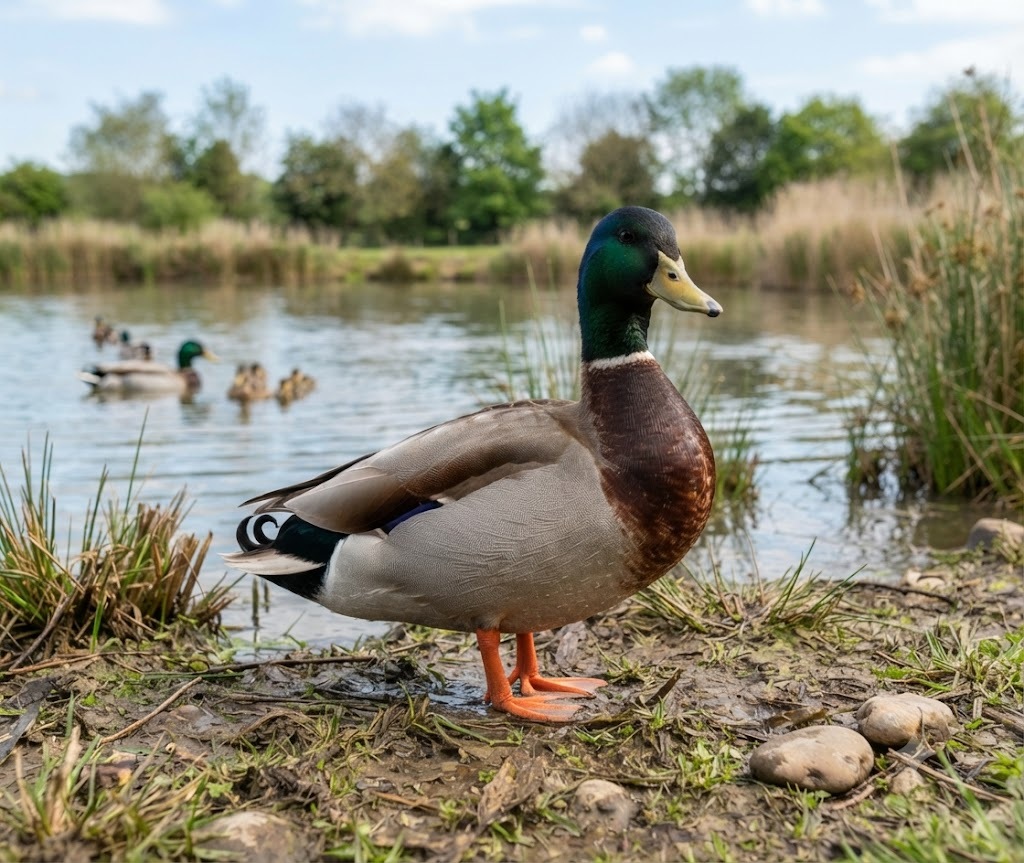
Most domesticated ducks originated from mallard lineages and are industrially classified into meat, breeding, and regional varieties. In Korea, duck meat is a major product, and the breeding and hatching industries form the upstream supply chain to meet this demand.
Therefore, simply registering it as "duck" in the RFQ is not sufficient. The trading conditions and buyers differ completely depending on whether it is a breeding duck, a hatching egg, a hatched duckling, a live animal for shipment, or chilled or frozen meat after slaughter.
division | Main purpose | major products |
| Breeding duck | breeding | fertilized eggs |
| hatching | production | duckling |
| meat duck | fattening | Happy Birthday |
| native duck | Meat and breeding | Livestock and Meat |
| Printing pressure and processing | food | Carcass and cuts |
| by-product | Processing and Industry | Fat, feathers, etc. |
The basic structure is managed as Duck → Production Type → Production Stage → Product → Buyer .
In ducks, the purpose of production is just as important as the breed name. For meat ducks, growth rate, feed efficiency, and market weight are key, while for breeding ducks, egg laying, fertilization rate, egg quality, and hatching rate are important.
Since native ducks may differ from standard meat ducks in terms of production duration, meat quality, and market positioning, they are not compared using the same productivity standards. MarketHub establishes separate benchmarks based on production objectives.
division | Key criteria | Management indicators |
| Breeding duck | breeding | Spawning and fertilization rates |
| fertilized eggs | hatching | Specifications and hatching rate |
| duckling | Standing | Health and uniformity |
| meat duck | fattening | Weight gain · FCR |
| native duck | Specialized meat | Growth and meat quality |
| conductor | Meat | Weight and quality |
In other words, it is practically appropriate to classify them in the order of production type → system → production stage → product specifications .
It is difficult to judge the productivity of a duck farm based solely on market weight. To assess actual profitability, one must also consider how uniformly the ducklings grow, how efficiently feed is used, and the mortality rate.
In breeding duck farms, the fertilization rate and the ratio of hatchable eggs are more important than the number of eggs laid. Therefore, it is advisable to verify the productivity of subsequent broiler farms by connecting the breeding ducks → eggs → hatcheries → ducklings.
Management area | Things to see at a farm |
| Breeding duck | Spawning and fertilization |
| fertilized eggs | Quality and Storage |
| hatching | Hatching rate and chick quality |
| feedstuff | Intake amount · Price |
| growth | Weight gain |
| health | Deaths and diseases |
| environment | Temperature, humidity, and ventilation |
| shipment | Age, weight, price |
The key is to connect stocking → feed → environment → growth → mortality → shipment into a single production lot.
Ducks are a livestock species that requires particular caution in preventing HPAI related to wild birds. Since the risk can be introduced through migratory and wild birds near farms, as well as the movement of vehicles, people, and equipment, controlling farm access, disinfection, and management of rearing facilities are crucial.
Furthermore, HPAI is not merely a farm disease issue. If the culling of breeding ducks or broiler ducks occurs, it can have a chain reaction affecting hatching eggs, ducklings, and shipment volumes, so it must be managed as a supply chain risk.
step | Key Management |
| fertilized eggs | Production Farm · Date · Lot |
| hatching | Hatchery and Hatching Rate |
| Standing | Ducklings · Quantity |
| breeding | Feed, Environment, Mortality |
| Disinfection | HPAI·Disinfection·Entry |
| shipment | Farm, Job, Vehicle |
| Do-ap | Inspection · Conductor Lot |
| circulation | Product · Buyer |
MarketHub is configured to allow tracking from Farm → Flock → Feed → Health → Slaughter Lot → Product → Buyer .
The domestic duck industry is centered on the production of meat ducks and consumption in the food service and processed industries, but the market is not formed solely by production farms. Breeding farms, hatcheries, feed companies, vertically integrated enterprises, slaughterhouses, meat processing companies, the food service industry, and distribution are all interconnected.
Therefore, from the farmer's perspective, securing a stable supply and distribution channels is more important than raising large quantities. From the buyer's perspective, the ability to receive duck meat of the required specifications at regular intervals is a key purchasing condition.
Participants | Things needed | RFQ |
| Duck breeding farm | Breeding stock, feed, and disease control | Breeding |
| hatchery | Hatching eggs · Hatching | Hatchery |
| Beef farms | Ducklings and Feed | Production |
| affiliated companies | Planned production | Contract |
| Do-ap-jang | stable shipment | Processing |
| meat processing company | Carcass and cuts | Product |
| food service companies | Standardized meat | Buyer |
| distribution company | Regular supply | Distribution |
MarketHub views contract production, which connects farm production capacity with buyer demand, as an important cooperation model.
The duck supply chain begins with breeding ducks and hatching eggs. Upstream supply information is important because a decrease in the supply of hatching eggs leads to a reduction in hatching and duckling stocking, which can eventually result in a decrease in the shipment of ducks for meat.
In international trade, hatching eggs, live livestock, duck meat, and processed products must be classified separately. In particular, since quarantine conditions may vary depending on the region of HPAI outbreak and the degree of product processing, the latest import and export conditions must be re-verified at the time of the actual RFQ.
Breeding Duck → Egg → Hatching → Duckling → Meat Farm → Slaughter → Processing → Distribution → Buyer
Transaction confirmation | Main contents |
| fertilized eggs | Lineage, Quantity, Hatching Conditions |
| duckling | Age, Health, Quantity |
| Happy Birthday | Weight and shipping conditions |
| duck meat | Carcass and cuts |
| Product form | Refrigeration, freezing, and processing |
| Quarantine | HPAI · Country of Origin |
| trade | HS·Customs·FTA |
| Buyer | Quantity, Specifications, Delivery Date |
In actual international RFQs, Origin + Product Form + HPAI Status + Quarantine + HS are verified based on the transaction date.
After slaughter, ducks are sold in various forms, including whole ducks, cuts, smoked meat, slices, and processed foods. Since by-products such as duck fat and feathers can also be utilized, it is necessary to consider the overall utilization of the entire carcass.
PRP does not rely solely on the farm's shipping weight but calculates production and processing conditions in reverse based on the actual product form desired by the buyer. For example, if the carcass specifications required by a smoked duck manufacturer and a restaurant differ, the farm's shipping targets may also change.
product | Main uses |
| fertilized eggs | hatching |
| duckling | Standing |
| Happy Birthday | Do-ap |
| Whole duck | Foodservice and retail |
| Partial meat | Food & Dining |
| Smoked and processed meat | processed foods |
| province | food ingredients |
| feathers | industrial materials |
Key PRP questions include the profit margin relative to feed costs, the extent of variation in shipping weight, whether the slaughter pressure yield is appropriate, whether it meets the specifications desired by the buyer, and whether added value can be increased after processing.
Since ducks are raised in large flocks, it is more practical to automatically collect data on environment, feed, water consumption, weight, and mortality for each chicken house rather than managing them individually. In particular, sudden changes in water or feed intake may indicate environmental or health issues.
Utilizing video AI can be advanced to identify abnormal signs by analyzing herd behavior, distribution, and movement. However, it is crucial for farms to first establish accurate records regarding stocking, feed, mortality, and shipment.
Apply AX | farm effect |
| environmental sensor | Temperature, humidity, and ventilation |
| feed sensor | Check intake |
| negative sensor | Early detection of abnormalities |
| Automatic weight | growth curve |
| Video AI | Behavioral and density analysis |
| Our Runtime | Problem section found |
| Shipment forecast | Planned production |
| Buyer Matching | Sales Channel Connection |
The basic structure is data collection → anomaly detection → cause analysis → specification improvement → shipment forecasting → Buyer supply .
In the duck industry, HPAI and supply and demand fluctuations are recurring critical issues. Because breeding, hatching, and broiler farms are interconnected, a production disruption at any one stage can affect the entire supply weeks or months later.
Within the farm, feed costs, mortality, heatwaves, ventilation, and deviations in shipping weight affect productivity. Therefore, the MarketHub Problem Bank manages disease prevention, farm productivity, and market supply and demand as a single problem structure.
problem | Verification data |
| HPAI | Occurrence/Slaughter |
| Egg shortage | Breeding ducks · Egg laying |
| Duckling tribe | Hatching rate · Stocking |
| Growth deviation | Weight · Feed |
| Dead | Environment and disease |
| heatwave | Temperature and cold water |
| feed costs | Price · FCR |
| Shipment fluctuations | Number of shipments |
| Price fluctuations | Farm and wholesale prices |
| Buyer shortage | Demand and specifications |
The resolution sequence is designed as follows : problem occurrence → verification of production lot → comparison of cause data → improvement of specifications and disease control → forecasting of supply volume → adjustment with Buyer .
A duck RFQ does not refer solely to the sale of finished duck meat. RFQs can arise at various stages, ranging from the procurement of breeding ducks, eggs, ducklings, and feed to slaughter, meat processing, OEM, and even foodservice and catering buyers.
Particularly in industries with a high proportion of vertically integrated production, production plans and shipment contracts are more important than individual farm production volumes. MarketHub separates and connects the conditions of independent farms, affiliated companies, processing companies, and buyers.
RFQ Type | Collaboration Examples |
| breeding stock | Breeding duck |
| fertilized eggs | For hatching |
| duckling | Farmhouse stocking |
| feedstuff | Meat and breeding ducks |
| Happy Birthday | shipment |
| Do-ap | Outsourcing |
| process | Smoked Meat · Meat Parts · OEM |
| Regular supply | Dining Out & School Meals |
| Import and export | Hatching eggs and meat |
| AX Pilot | Environment and Productivity |
Sensitive information such as price, contract conditions, and farm performance is managed at the Verified/NDA stage.
In the MarketHub Livestock Library, it is more important to first identify who needs which products and in what quantities, rather than simply providing duck farming information . If shortages of hatching eggs or ducklings occur, or if there are changes in the supply and demand of duck meat, it is essential to be able to quickly connect production and buyer information.
Therefore, it is advisable for producers to transition from a method of finding sales channels after production to a structure of planned production that verifies the specifications and quantities of buyers and affiliated companies.
① Find products/raw materials.
Need Products & Materials
Companies seeking necessary hatching eggs, ducklings, live livestock, duck meat, feed, and processed raw materials register their purchase demands. MarketHub reviews available producers and companies by verifying specifications, quantity, region, delivery time, and disease prevention conditions.
RFQ Registration → Verify Supply Conditions → Connect with Producer → AI Matching
Register
② We are looking for production and manufacturing partners.
Need Suppliers & Manufacturers
We are seeking necessary production and processing partners, including breeding duck farms, hatcheries, broiler farms, slaughterhouses, meat processing plants, and OEM/ODM companies. We verify not only production capacity but also disease prevention, quality, and the ability to ensure a continuous supply.
RFQ Submission → Review of Production/Processing Capabilities → Partner Connection → AI Partner Matching
Register
③ We are looking for domestic and international buyers.
Need Buyers
Farms and processing companies seek new buyers, including food service, catering, food industry, and distribution companies. We verify product type, specifications, quantity, and delivery time to connect them with suitable buyers.
RFQ Registration → Supply Capability Review → Buyer Connection → AI Buyer Matching
Register
Contact : mail@markethub.org
Due to the large population of ducks, it is more practical to manage them at the Flock, House, and Production Lot levels rather than recording every individual . Breeding ducks are subdivided down to the individual and lineage levels if necessary, while meat ducks are managed based on the entry lot.
Using this structure, you can track which hatchery's ducklings were introduced to which farm, on what feed and in what environment they grew, and which slaughter lot and product they ultimately led to.
Dataset | Simply put |
| Master | Duck Type and Product Standards |
| Entity | Farm · Chicken House · Flock · Company · Buyer |
| Relationship | Hatching, rearing, slaughter, trading |
| Runtime | Weight · Mortality · Feed · Price · Disease |
The representative structure is as follows.
Breeding Ducks → Hatching Eggs → Hatchery → Duckling Lot → Farm/Poultry House → Feed/Environment → Shipment → Slaughter Lot → Product → Buyer
Disease information is:
HPAI Outbreak → Region/Farm → Culling/Movement Restrictions → Impact on Hatching Eggs, Ducklings, and Shipments
Connect to.
In the duck industry, managing reference dates is crucial due to the rapid fluctuations in HPAI outbreaks, rearing numbers, stocking volumes, slaughter pressure, and prices. For actual registration data, official sources such as Statistics Korea, the Ministry of Agriculture, Food and Rural Affairs, the Animal and Plant Quarantine Agency, and the Korea Animal Products Quality Evaluation Institute are used with top priority.
In particular, the total number of animals raised, the number of animals slaughtered, the volume of graded animals, and projected figures are not mixed with one another. For each data point, the survey time and definition are stored together in the dataset, and unverified figures are not arbitrarily supplemented.
Evidence | source |
| A | Government · Official Statistics · WOAH |
| B | National research institutes and papers |
| C | Association/Verification Industry Data |
| D | Corporate and Market Data |
| E | Additional verification needed |
Key factual basis
- Domestic ducks have formed an independent supply chain for poultry production, hatching, slaughtering, and processing, centered on meat ducks and breeding ducks.
- Since duck production follows a chain from breeding ducks to hatching eggs, hatching, ducklings, and finally to meat farms, disruptions in upstream production can affect subsequent shipments.
- HPAI is a critical disease control risk that can have a significant impact on the production, movement, and supply chains of poultry, including ducks.
- Since the number of ducks raised, slaughter pressure, and prices in the domestic duck industry fluctuate depending on the season and disease conditions, they must be managed using runtime data.
- In actual import and export, quarantine conditions vary by live livestock, hatching eggs, meat, and processed products, so the latest standards must be checked at the time of transaction.
Version History
Version | Main contents | situation |
| v1.0 | First registration of production, hatching, disease control, slaughter, and supply chain standards | complete |
| v1.1 | Link to the latest statistics on breeding, slaughter, prices, and imports/exports | expected |
| v2.0 | Flock · Feed · Environment · FCR · PRP Runtime | expected |
| v3.0 | Farms · Hatcheries · Processing Companies · Buyer Matching | expected |